Ebola: Symptoms, History and Origins (FutureLearn)

Offered by Lancaster University,
Ebola: Symptoms, History and Origins (FutureLearn)

Learn about Ebola, its symptoms, where it came from and what the current outbreak has taught us, with this free online course.

Class Deals by MOOC List - Click here and see FutureLearn's Active Discounts, Deals, and Promo Codes.

In December 2013, the largest outbreak of Ebola virus disease (EVD) that the world has ever seen, began in West Africa - a region of the continent that has historically been free of it.
The World Health Organization (WHO) has designated this situation as a Public Health Emergency of International Concern (PHEIC), and the outbreak has been covered extensively in the global media.

Go behind the headlines on Ebola
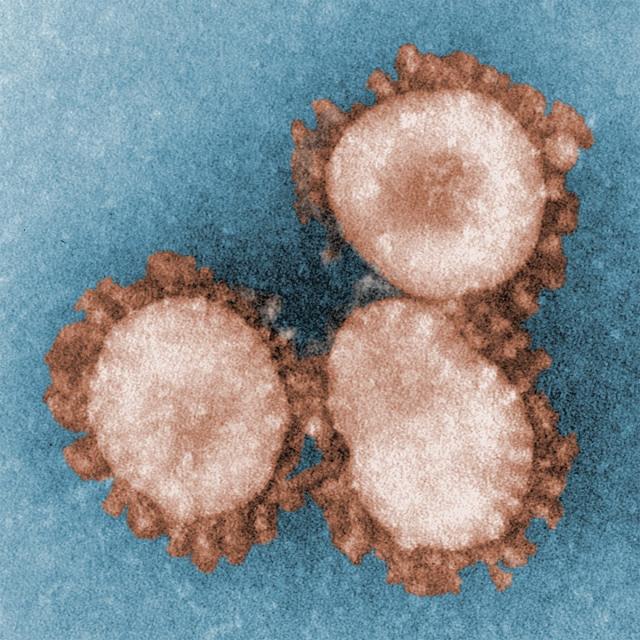
In this free online course, we’ll learn more about the virus that causes Ebola and the symptoms of the disease. We’ll also be tracing the current outbreak from its early cases to the most recent infections.
Over two weeks, we’ll consider what can be done to stop the spread of the virus and how we can treat those infected, in terms of general care, drugs and vaccines.
We’ll also learn about the genetic structure of the virus, looking at some of its proteins; where it came from and where it may reside between outbreaks; and its evolutionary history.

Learn through practical sessions and discussions
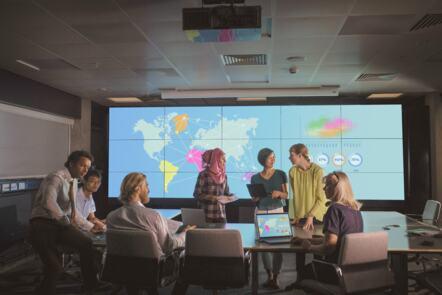
There will be practical sessions, using free software to do your own analysis on the virus, as well as discussions with guest academics: Thomas Keegan of Lancaster Medical School on aspects of epidemiology; and James Fraser of Lancaster Environment Centre on anthropology relevant to the outbreak.
You’ll have the opportunity to test the knowledge you acquire about Ebola with quizzes at the end of each week.
Go to Class
MOOC List is learner-supported. When you buy through links on our site, we may earn an affiliate commission.

Related Courses

Infectious Disease Transmission Models for Decision-Makers (Coursera) Coursera
Johns Hopkins University

Infectious Disease Transmission Models for Decision-Makers (Coursera)

During the COVID-19 pandemic, both the promise and perils of using infectious disease transmission models to make public health policy decisions became clearer than ever. Optimal use of modeled output requires that public health policy makers be informed consumers of models, that they understand the strengths and limitations of possible approaches, and they know the right questions to ask about the vulnerabilities of the model results. **Free enrollment available until July 30, 2025. Valid for one enrollment per person.**

Aug 3rd 2026
1 Week
Antibiotic Resistance: the Silent Tsunami (FutureLearn) FutureLearn
Uppsala University

Antibiotic Resistance: the Silent Tsunami (FutureLearn)

Understand antibiotic resistance and what actions are needed to address this increasingly serious global health threat. The introduction of the first antibiotic in the 1940s marks a true turning point in human history. For the first time, once deadly infectious diseases, such as pneumonia and bloodstream infections, became manageable health problems and new horizons for modern medicine were defined. The marketing of other antibiotics soon followed, and as a result of their initial success, bacterial infections were considered to be permanently defeated.

No sessions available
4 Weeks
COVID-19: Tackling the Novel Coronavirus (FutureLearn) FutureLearn
London School of Hygiene & Tropical Medicine,UK Public Health Rapid Support Team

COVID-19: Tackling the Novel Coronavirus (FutureLearn)

What is COVID-19 and how might the outbreak affect you? Find out more about coronavirus and explore its worldwide implications. Understand the emergence of COVID-19 and how we respond to it going forward. The world is paying close attention to the outbreak of novel coronavirus, following its emergence in December 2019 in Wuhan, China.

No sessions available
3 Weeks
Laboratory Training for COVID-19 Molecular Testing (FutureLearn) FutureLearn
Foundation for Innovative New Diagnostics - FIND

Laboratory Training for COVID-19 Molecular Testing (FutureLearn)

Learn how to plan for and establish COVID-19 testing in your laboratory to ensure accurate, timely and impactful results. Understand the components of COVID-19 testing in the laboratory. With the world reeling from the COVID-19 pandemic, testing capacity has emerged as a major issue. Adequate testing capacity for SARS-CoV-2 is crucial to halting the outbreak.

No sessions available
1 Week
Ebola in Context: Understanding Transmission, Response and Control (FutureLearn) FutureLearn
London School of Hygiene & Tropical Medicine

Ebola in Context: Understanding Transmission, Response and Control (FutureLearn)

How has the Ebola outbreak become a humanitarian emergency? Learn about the science behind the crisis.In 2014, Ebola went from a scarcely known virus to the subject of daily news reports. The epidemic in West Africa has quickly surpassed all previous outbreaks, to become an unprecedented humanitarian crisis.

No sessions available
3 Weeks
Interventions and Calibration (Coursera) Coursera
Imperial College London

Interventions and Calibration (Coursera)

This course covers approaches for modelling treatment of infectious disease, as well as for modelling vaccination. Building on the SIR model, you will learn how to incorporate additional compartments to represent the effects of interventions, such the effect of vaccination in reducing susceptibility. You will learn about ‘leaky’ vaccines and how to model them, as well as different types of vaccine and treatment effects.

Jul 27th 2026
4 Weeks
Developing the SIR Model (Coursera) Coursera
Imperial College London

Developing the SIR Model (Coursera)

Compartmental modelling is a cornerstone of mathematical modelling of infectious diseases and this course will introduce some of the basic concepts in building compartmental models, including how to interpret and represent rates, durations and proportions. You'll learn to place the mathematics to one side and concentrate on gaining intuition into the behaviour of a simple epidemic, and be introduced to further basic concepts of infectious disease epidemiology, such as the basic reproduction number (R0) and its implications for infectious disease dynamics.

Jul 27th 2026
4 Weeks
Pathogen Genomics: A New Era in Global Health Surveillance and Strategy (FutureLearn) FutureLearn
Wellcome Connecting Science,COG-Train

Pathogen Genomics: A New Era in Global Health Surveillance and Strategy (FutureLearn)

Learn how genomics can help contain infectious diseases, prevent future global health threats, and better protect public health. On this three-week course taught by experts in pathogen genomics and epidemiology, you’ll review recent developments in genomic surveillance, and explore how these could inform public health actions.

Mar 6th 2023
3 Weeks
An Introduction to Global Health (Coursera) Coursera
University of Copenhagen

An Introduction to Global Health (Coursera)

This course will provide you with an overview of the most important health challenges facing the world today. You will gain insight into how challenges have changed over time, we will discuss the likely determinants of such changes and examine future projections. Successful international strategies and programs promoting human health will be highlighted and global health governance structures will be mapped and the role of the key actors explored.

Aug 3rd 2026
5-12 Weeks
Rastreamento de contato da COVID-19 (Coursera) Coursera
Johns Hopkins University

Rastreamento de contato da COVID-19 (Coursera)

A crise da COVID-19 criou uma necessidade sem precedentes de rastreamento de contato em todo o país, exigindo que milhares de pessoas aprendessem rapidamente as principais habilidades. As qualificações para os cargos de rastreamento de contato diferem em todo o país e no mundo, com alguns novos cargos abertos a indivíduos com diploma de ensino médio ou equivalente.

Jul 27th 2026
1 Week
Immunology: Adaptive Immune System (Coursera) Coursera
Imperial College London

Immunology: Adaptive Immune System (Coursera)

In this course, you will learn about the role of immune responses of the adaptive (acquired) immune system which provides specialised immunity against pathogens. Guided by our researchers in the Department of Immunity and Inflammation, we will take a closer look at the lymphocyte subsets and mechanisms involved in this delayed finely tuned response occurring days to weeks after the initial exposure to microbial antigens.

Jul 27th 2026
5-12 Weeks