Calculus: Single Variable Part 1 - Functions (Coursera)

Calculus: Single Variable Part 1 - Functions (Coursera)

Calculus is one of the grandest achievements of human thought, explaining everything from planetary orbits to the optimal size of a city to the periodicity of a heartbeat. This brisk course covers the core ideas of single-variable Calculus with emphases on conceptual understanding and applications. The course is ideal for students beginning in the engineering, physical, and social sciences.

Class Deals by MOOC List - Click here and see Coursera's Active Discounts, Deals, and Promo Codes.

Distinguishing features of the course include: 1) the introduction and use of Taylor series and approximations from the beginning; 2) a novel synthesis of discrete and continuous forms of Calculus; 3) an emphasis on the conceptual over the computational; and 4) a clear, dynamic, unified approach.
In this first part--part one of five--you will extend your understanding of Taylor series, review limits, learn the why behind l'Hopital's rule, and, most importantly, learn a new language for describing growth and decay of functions: the BIG O.

Syllabus

WEEK 1
Introduction
Welcome to Calculus: Single Variable! below you will find the course's diagnostic exam. if you like, please take the exam. you don't need to score a minimal amount on the diagnostic in order to take the course. but if you do get a low score, you might want to readjust your expectations: this is a very hard class...

WEEK 2
A Review of Functions
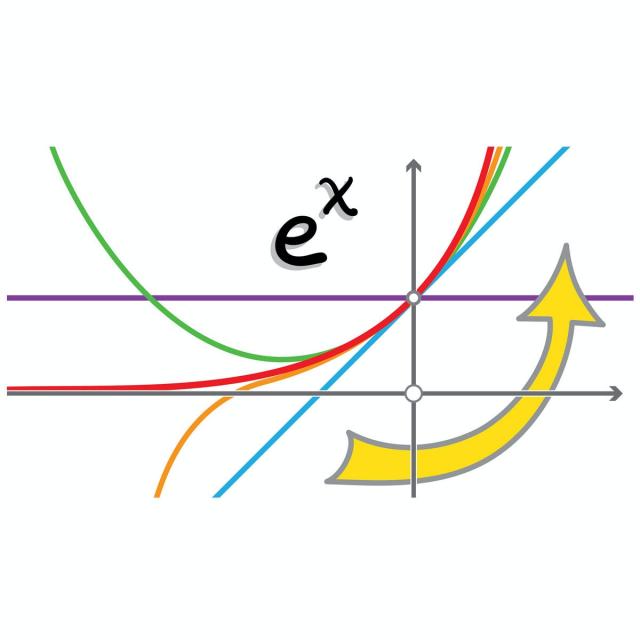
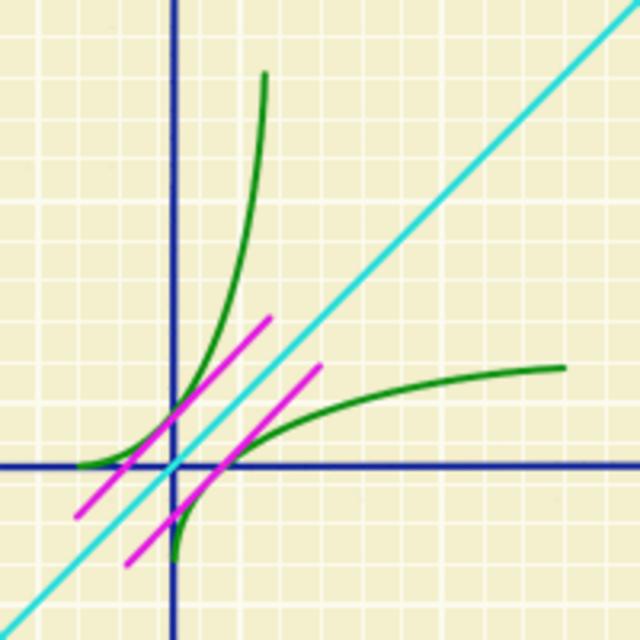
This module will review the basics of your (pre-)calculus background and set the stage for the rest of the course by considering the question: just what is the exponential function?

WEEK 3
Taylor Series
This module gets at the heart of the entire course: the Taylor series, which provides an approximation to a function as a series, or "long polynomial". You will learn what a Taylor series is and how to compute it. Don't worry! The notation may be unfamiliar, but it's all just working with polynomials....

WEEK 4
Limits and Asymptotics
A Taylor series may or may not converge, depending on its limiting (or "asymptotic") properties. Indeed, Taylor series are a perfect tool for understanding limits, both large and small, making sense of such methods as that of l'Hopital. To solidify these newfound skills, we introduce the language of "big-O" as a means of bounding the size of asymptotic terms. This language will be put to use in future Chapters on Calculus.
Go to Class
MOOC List is learner-supported. When you buy through links on our site, we may earn an affiliate commission.

Related Courses

Image and video processing: From Mars to Hollywood with a stop at the hospital (Coursera) Coursera
Duke University

Image and video processing: From Mars to Hollywood with a stop at the hospital (Coursera)

In this course, you will learn the science behind how digital images and video are made, altered, stored, and used. We will look at the vast world of digital imaging, from how computers and digital cameras form images to how digital special effects are used in Hollywood movies to how the Mars Rover was able to send photographs across millions of miles of space.

Jun 15th 2026
5-12 Weeks
Precalculus: Mathematical Modeling (Coursera) Coursera
Johns Hopkins University

Precalculus: Mathematical Modeling (Coursera)

This course helps to build the foundational material to use mathematics as a tool to model, understand, and interpret the world around us. This is done through studying functions, their properties, and applications to data analysis. Concepts of precalculus provide the set of tools for the beginning student to begin their scientific career, preparing them for future science and calculus courses. This course is designed for all students, not just those interested in further mathematics courses.

Jun 15th 2026
4 Weeks
Analytic Combinatorics (Coursera) Coursera
Princeton University

Analytic Combinatorics (Coursera)

Analytic Combinatorics teaches a calculus that enables precise quantitative predictions of large combinatorial structures. This course introduces the symbolic method to derive functional relations among ordinary, exponential, and multivariate generating functions, and methods in complex analysis for deriving accurate asymptotics from the GF equations. All the features of this course are available for free. It does not offer a certificate upon completion.

Jun 15th 2026
5-12 Weeks
Differential Equations Part III Systems of Equations (Coursera) Coursera
Korea Advanced Institute of Science and Technology - KAIST

Differential Equations Part III Systems of Equations (Coursera)

This introductory courses on (Ordinary) Differential Equations are mainly for the people, who need differential equations mostly for the practical use in their own fields. So we try to provide basic terminologies, concepts, and methods of solving various types of differential equations as well as a rudimentary but indispensable knowledge of the underlying theory and some related applications.

Jun 15th 2026
5-12 Weeks
Mathematics for Engineers: The Capstone Course (Coursera) Coursera
The Hong Kong University of Science and Technology - HKUST

Mathematics for Engineers: The Capstone Course (Coursera)

Mathematics for Engineers: The Capstone Course provides a capstone project for students who are completing the Mathematics for Engineers specialization. Students will first learn some basic concepts in computational fluid dynamics, and then apply these concepts to compute the fluid flow around a cylinder. Access to MATLAB online and the MATLAB grader is given to all students who enroll.

Jun 15th 2026
3 Weeks
Abstraction, Problem Decomposition, and Functions (Coursera) Coursera
University of Colorado System

Abstraction, Problem Decomposition, and Functions (Coursera)

This course is the third course in the specialization exploring both computational thinking and beginning C programming. Rather than trying to define computational thinking, we’ll just say it’s a problem-solving process that includes lots of different components. Most people have a better understanding of what beginning C programming means!

Jun 15th 2026
4 Weeks
Java Object Basics: Functions, Recursion, and Objects (Coursera) Coursera
Codio

Java Object Basics: Functions, Recursion, and Objects (Coursera)

Code and run your first Java program in minutes without installing anything! This course is designed for learners with limited coding experience, providing a solid foundation of not just Java, but core Computer Science topics that can be transferred to other languages. The modules in this course cover functions, recursion, objects, and mutability. Completion of the prior 2 courses in this specialization are recommended.

Jun 15th 2026
4 Weeks
Calculus through Data & Modeling: Applying Differentiation (Coursera) Coursera
Johns Hopkins University

Calculus through Data & Modeling: Applying Differentiation (Coursera)

As rates of change, derivatives give us information about the shape of a graph. In this course, we will apply the derivative to find linear approximations for single-variable and multi-variable functions. This gives us a straightforward way to estimate functions that may be complicated or difficult to evaluate. We will also use the derivative to locate the maximum and minimum values of a function. These optimization techniques are important for all fields, including the natural sciences and data analysis. The topics in this course lend themselves to many real-world applications, such as machine learning, minimizing costs or maximizing profits.

Jun 15th 2026
5-12 Weeks
Python Essentials for MLOps (Coursera) Coursera
Duke University

Python Essentials for MLOps (Coursera)

Python Essentials for MLOps is a course designed to provide learners with the fundamental Python skills needed to succeed in an MLOps role. This course covers the basics of the Python programming language, including data types, functions, modules and testing techniques. It also covers how to work effectively with data sets and other data science tasks with Pandas and NumPy.

Jun 15th 2026
5-12 Weeks
Initiation à la théorie des distributions (Coursera) Coursera
École Polytechnique

Initiation à la théorie des distributions (Coursera)

Une fonction discontinue peut-elle être solution d'une équation différentielle? Comment définir rigoureusement la masse de Dirac (une "fonction" d'intégrale un, nulle partout sauf en un point) et ses dérivées? Peut-on définir une notion de "dérivée d'ordre fractionnaire"? Cette initiation aux distributions répond à ces questions - et à bien d'autres.

Jun 15th 2026
5-12 Weeks
Introduction to Mathematical Thinking (Coursera) Coursera
Stanford University

Introduction to Mathematical Thinking (Coursera)

Learn how to think the way mathematicians do - a powerful cognitive process developed over thousands of years. Mathematical thinking is not the same as doing mathematics – at least not as mathematics is typically presented in our school system. School math typically focuses on learning procedures to solve highly stereotyped problems. Professional mathematicians think a certain way to solve real problems, problems that can arise from the everyday world, or from science, or from within mathematics itself.

Jun 15th 2026
5-12 Weeks
Python Programming Essentials (Coursera) Coursera
Rice University

Python Programming Essentials (Coursera)

This course will introduce you to the wonderful world of Python programming! We'll learn about the essential elements of programming and how to construct basic Python programs. We will cover expressions, variables, functions, logic, and conditionals, which are foundational concepts in computer programming. We will also teach you how to use Python modules, which enable you to benefit from the vast array of functionality that is already a part of the Python language. These concepts and skills will help you to begin to think like a computer programmer and to understand how to go about writing Python programs.

Jun 15th 2026
4 Weeks