Building Modern Python Applications on AWS (Coursera)

Offered by AWS,
Building Modern Python Applications on AWS (Coursera)

In modern cloud native application development, it’s oftentimes the goal to build out serverless architectures that are scalable, are highly available, and are fully managed. This means less operational overhead for you and your business, and more focusing on the applications and business specific projects that differentiate you in your marketplace. In this course, we will be covering how to build a modern, greenfield serverless backend on AWS.

Class Deals by MOOC List - Click here and see Coursera's Active Discounts, Deals, and Promo Codes.

Building brand new applications on AWS is a different task than lifting and shifting existing applications into AWS. When you have an existing application that you need to move to AWS, you might first look to using Amazon EC2 as your virtual machines, or maybe you might look into using docker containers and container hosting services like Amazon Elastic Container Service or Amazon Elastic Kubernetes Service. Those are all great application hosting options, but in most cases, they still require you to have some kind of pulse on the underlying infrastructure hosting your application. `
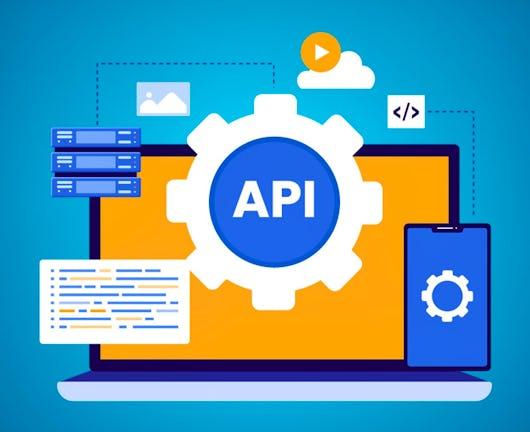
Building Modern Python Applications on AWS will explore how to build an API driven application using Amazon API Gateway for serverless API hosting, AWS Lambda for serverless computing, and Amazon Cognito for serverless authentication. We will follow an API driven development process and first mock up what the API will look like. We will cover all the ins and outs of the service Amazon API Gateway, and as you’ll learn- it does a lot more than just hosting an API.
Then we will add authentication to the API using Amazon Cognito. You’ll learn about how the authorization flow works with Cognito, and how to build it into your APIs. From there, we will add a Lambda backend that will be triggered by API Gateway. The lambda functions will be using the AWS SDKs to perform various data processing tasks. You’ll learn about the different configurations that exist for Lambda, and we will show you how to create and manage lambda functions. Some of the features of our API will require multiple lambda functions to execute in a specific order, like a workflow, and we will use AWS Step Functions to create a serverless workflow. Finally, we will talk about how to optimize your APIs at every layer using AWS features.
Note: There are four versions of this class, "Building Modern Node.js Applications on AWS" for Node.js developers, Building Modern Java Applications on AWS" for Java developers, "Building Modern .NET Applications on AWS" for .NET developers, and this course, "Building Modern Python Applications on AWS" for Python developers. The courses do for a large part, overlap and in general, we recommend that you take the course that focuses on the SDK you plan to use to develop your AWS Cloud based applications.
We expect that you have basic knowledge of AWS already. Some examples of concepts you should be familiar with are: you should know the basics of the AWS Global infrastructure, like what regions and availability zones are. You also should know the at a high-level AWS Identity and Access Management, or IAM, and how it is used to control access to AWS resources. You should also understand what an Amazon EC2 instance is, what Amazon S3 is, what a VPC is, as well as other basic AWS terminology.

Go to Class
MOOC List is learner-supported. When you buy through links on our site, we may earn an affiliate commission.

Related Courses

Introduction to PySpark (Coursera) Coursera
Edureka

Introduction to PySpark (Coursera)

Welcome to Introduction to PySpark, a short course strategically crafted to empower you with the skills needed to assess the concepts of Big Data Management and efficiently perform data analysis using PySpark. Throughout this short course, you will acquire the expertise to perform data processing with PySpark, enabling you to efficiently handle large-scale datasets, conduct advanced analytics, and derive valuable insights from diverse data sources.

Oct 12th 2026
1 Week
An Introduction to Interactive Programming in Python (Part 2) (Coursera) Coursera
Rice University

An Introduction to Interactive Programming in Python (Part 2) (Coursera)

This two-part course is designed to help students with very little or no computing background learn the basics of building simple interactive applications. Our language of choice, Python, is an easy-to learn, high-level computer language that is used in many of the computational courses offered on Coursera. To make learning Python easy, we have developed a new browser-based programming environment that makes developing interactive applications in Python simple.

Oct 5th 2026
4 Weeks
Accounting Data Analytics with Python (Coursera) Coursera
University of Illinois at Urbana-Champaign

Accounting Data Analytics with Python (Coursera)

This course focuses on developing Python skills for assembling business data. It will cover some of the same material from Introduction to Accounting Data Analytics and Visualization, but in a more general purpose programming environment (Jupyter Notebook for Python), rather than in Excel and the Visual Basic Editor. These concepts are taught within the context of one or more accounting data domains (e.g., financial statement data from EDGAR, stock data, loan data, point-of-sale data).

Oct 12th 2026
5-12 Weeks
Amazon Aurora Service Introduction (Coursera) Coursera
Edureka

Amazon Aurora Service Introduction (Coursera)

Welcome to the Amazon Aurora Service Introduction course, where you'll embark on a journey to acquire practical expertise in Aurora databases and harness the power of Amazon Web Services (AWS) for efficient data management. Throughout this short course, you'll explore the industry-specific applications of Aurora and delve into database fundamentals.

Oct 12th 2026
1 Week
Foundations of Data Science: K-Means Clustering in Python (Coursera) Coursera
University of London,Goldsmiths, University of London

Foundations of Data Science: K-Means Clustering in Python (Coursera)

This MOOC, designed by an academic team from Goldsmiths, University of London, will quickly introduce you to the core concepts of Data Science to prepare you for intermediate and advanced Data Science courses. It focuses on the basic mathematics, statistics and programming skills that are necessary for typical data analysis tasks.

Oct 5th 2026
5-12 Weeks
Design Computing: 3D Modeling in Rhinoceros with Python/Rhinoscript (Coursera) Coursera
University of Michigan

Design Computing: 3D Modeling in Rhinoceros with Python/Rhinoscript (Coursera)

Why should a designer learn to code? As our world is increasingly impacted by the use of algorithms, designers must learn how to use and create design computing programs. Designers must go beyond the narrowly focused use of computers in the automation of simple drafting/modeling tasks and instead explore the extraordinary potential digitalization holds for design culture/practice.

Oct 12th 2026
5-12 Weeks
Cloud Computing Security (Coursera) Coursera
University of Colorado System

Cloud Computing Security (Coursera)

In this MOOC, we will learn Cloud Computing basics using AWS as an example, We will guide you to create AWS account, planning AWS resources for your cloud systems, create AWS EC2 instances, access them and configure the popular LAMP web services with MySQL database. We will guide you to create user accounts for your programmer or operators using AWS Identify and Access management GUI, Register your domain name and setup DNS entry for your servers using AWS Route 53 in 22 mintues! and show you how to use AWS Command Line interface to create and managing instances and services programmatically.

Oct 5th 2026
4 Weeks
The Fundamental of Data-Driven Investment (Coursera) Coursera
Sungkyunkwan University - SKKU

The Fundamental of Data-Driven Investment (Coursera)

In this course, the instructor will discuss the fundamental analysis of investment using R programming. The course will cover investment analysis topics, but at the same time, make you practice it using R programming. This course's focus is to train you to do the elemental analysis for investment management that you might need to do in your job every day. Additionally, the study note to do using Python programming will be provided.

Oct 5th 2026
4 Weeks
Introducción a la programación en Python I: Aprendiendo a programar con Python (Coursera) Coursera
Pontificia Universidad Católica de Chile

Introducción a la programación en Python I: Aprendiendo a programar con Python (Coursera)

Decía Steve Jobs que “todo el mundo debería aprender a programar un ordenador porque esto te ayuda a pensar”. Hoy en día la programación es una herramienta fundamental para el desarrollo de la tecnología moderna. Este curso te introduce en el mundo de la programación en el lenguaje Python.

Oct 5th 2026
5-12 Weeks