Blockchain, Cryptoassets, and Decentralized Finance (Coursera)

Offered by INSEAD,
Blockchain, Cryptoassets, and Decentralized Finance (Coursera)

Today, large intermediaries establish trust in our economy and control the movement, storage, and allocation of money and assets. The status quo, however, is rife with inefficiencies. In this course, we’ll address the many challenges of the status quo and discuss how cryptoassets, smart contracts, new identity systems, and new financial business models can help overcome them. You’ll learn how blockchain technology empowers individuals, entrepreneurs, and businesses with the tools they need to help level the playing field and to participate in the value they create.

Class Deals by MOOC List - Click here and see Coursera's Active Discounts, Deals, and Promo Codes.

By the end of this course, you’ll learn how and why transacting on the blockchain can help us bring about a future that is faster, fairer, and more distributed than the world we inhabit today.

What You Will Learn

  • Describe seven types of cryptoassets, and explain what it means to “tokenize” an asset
  • Explain what a smart contract is, as well as various applications of smart contracts
  • Explore the features of a distributed, self-sovereign identity system
  • Describe eight core functions of the financial services industry and explain how blockchain will disrupt each of these functions

Course 2 of 4 in the Blockchain Revolution in Financial Services Specialization.

Syllabus

WEEK 1
Cryptoassets
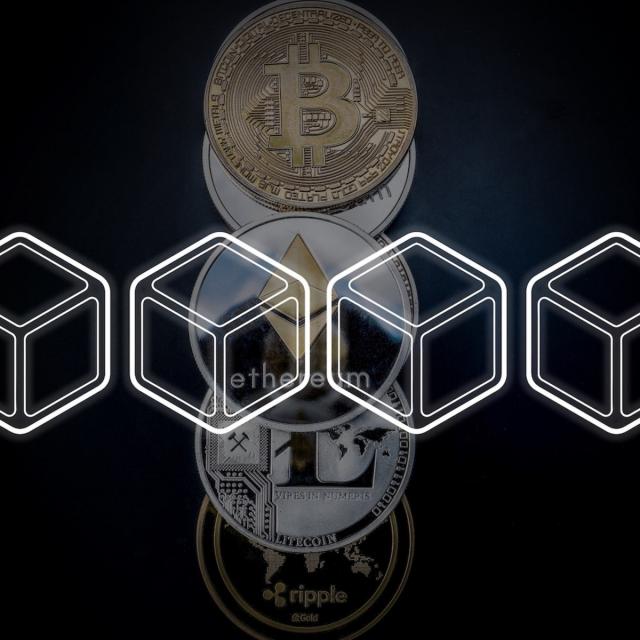
Blockchain is the first native digital medium for value. Consequently, we are witnessing one of the largest transformations of wealth in human history—from paper-based analog assets to digital ones. In this module, students will learn about seven different kinds of cryptoassets, including cryptocurrencies, protocol tokens, utility tokens, securities tokens, natural asset tokens, crypto collectibles, crypto-fiat currencies, and stablecoins.

WEEK 2
Smart Contracts
In this module, you will learn what smart contracts are and how they work. We will discuss how blockchain-based smart contracts can enable individuals and organizations to reduce transaction costs, minimize the need for third-party intermediaries, and improve productivity, security, and privacy.

WEEK 3
Identity
Accessing large, centralized systems such as email, health insurance, or a bank account requires the provision of various identifiers—for example, government-issued ID cards, self-selected passwords, or biometric data. However, identifier-based systems are problematic—both administratively and philosophically. In this module you will learn about five problems with identifier-based systems and explain how a distributed self-sovereign identity system, deployed on the blockchain, can resolve many of these issues.

WEEK 4
DApps and Distributed Business Models
There are countless opportunities for blockchain to disrupt or displace traditional centralized business models. In this module, we explore how blockchain technology can support “open networked enterprise” business models through the inclusion of native payment systems, reputation systems, uncensorable content, trustless transactions, smart contracts, and autonomous agents.

Go to Class
MOOC List is learner-supported. When you buy through links on our site, we may earn an affiliate commission.

Related Courses

Artificial Intelligence in Marketing (Coursera) Coursera
University of Virginia

Artificial Intelligence in Marketing (Coursera)

AI is everywhere! By harnessing the power of Artificial Intelligence, businesses and marketers have amazing growth potential, and the opportunities to enhance marketing with AI are always expanding. But how can businesses use AI tools to drive their success and gain sustainable competitive advantages? What are the challenges faced by businesses as they implement AI into their marketing strategies? In this course, developed at the Darden School of Business at the University of Virginia, and delivered by Professor of Business Administration Raj Venkatesan, you will explore an important frontier of digital transformation in marketing.

Aug 3rd 2026
4 Weeks
Innovating with the Business Model Canvas (Coursera) Coursera
University of Virginia

Innovating with the Business Model Canvas (Coursera)

Have you ever gotten really excited about reading or writing a business plan? You might have started out excited, but I’m going to bet you didn’t stay that way. Let’s be honest- business plans are boring and mostly ignored. In this course, you’ll learn key tools from the worlds of design thinking and Lean Startup to approach the Canvas with thoughtfulness, focus, and above all a test-driven approach to business model innovation.

Aug 3rd 2026
2 Weeks
Diseño y Creación de un Emprendimiento Social (Coursera) Coursera
Pontificia Universidad Católica de Chile

Diseño y Creación de un Emprendimiento Social (Coursera)

Este MOOC introduce al mundo del emprendimiento social definiendo conceptos de innovación y emprendimiento social dentro de un contexto nacional e internacional, por medio de herramientas, metodologías y técnicas útiles para desarrollar un modelo de negocios con misión social. También se utilizará un enfoque interdisciplinario, abarcando las temáticas del curso desde la perspectiva de la gestión de proyectos, la creatividad, la ideación, el diseño e implementación de soluciones y el comportamiento humano en la sociedad.

Aug 10th 2026
4 Weeks
La Disrupción del Blockchain (Coursera) Coursera
Universidad Austral

La Disrupción del Blockchain (Coursera)

Muchas personas ya conocen al bitcoin, la moneda digital que en pocos años pasó de valer unos pocos centavos a miles de dólares. Pero esto es sólo la punta del iceberg de un fenómeno mucho más grande. El blockchain, la tecnología en la que se basa el bitcoin, tiene el potencial de disrumpir los negocios, las finanzas, las leyes y hasta los gobiernos.

Aug 3rd 2026
5-12 Weeks
Deploying the circular economy within organisations (Coursera) Coursera
ESSEC Business School

Deploying the circular economy within organisations (Coursera)

How can companies act in the fight against global warming? This is an increasingly pressing question for all actors of our society. Big companies, SMEs, start-ups but also charities and public actors, the circular economy is part of solutions to be deployed at a large scale by all these actors, to promote an economy that respects planet boundaries, consumes less natural resources, emits less greenhouse gases and produces less waste. With this MOOC, you will understand the limits of the linear economy, based on the "Take-Make-Waste" principle, as well as the need for a shift towards circular economy.

Aug 10th 2026
4 Weeks
Finanzas personales (Coursera) Coursera
Universidad Nacional Autónoma de México

Finanzas personales (Coursera)

Este curso dotará a sus participantes con las herramientas que le permitirán llevar a cabo una planeación financiera personal y entender la necesidad de salvaguardar su patrimonio y recursos financieros, así como los requerimientos mínimos que se deben considerar para tomar buenas decisiones financieras.

Aug 10th 2026
3 Weeks
Social Business Model and Planning for Social Innovation (Coursera) Coursera
Copenhagen Business School

Social Business Model and Planning for Social Innovation (Coursera)

In this course we will take the social business opportunity that you have identified in the first course to a higher level. Specifically, you will develop a business model using the Business Model Canvas. Gradually you will also start writing your business plan. Moreover, you will be able to assess different organizational forms and select the one that is appropriate for your developed business model.

Aug 10th 2026
5-12 Weeks
Finance of Mergers and Acquisitions: Designing an M&A Deal (Coursera) Coursera
University of Illinois at Urbana-Champaign

Finance of Mergers and Acquisitions: Designing an M&A Deal (Coursera)

This course focuses on the theory and practice of mergers and acquisitions (M&A), with a focus on the Finance. The Finance of M&A uses tools from different areas of Finance to help managers and investment bankers design successful M&A deals. In particular, we will learn to value and price M&A deals and how to choose the optimal financing mix for an M&A deal. The course focuses on all the major types of M&A deals including strategic M&A, private equity leveraged buyouts (LBOs), and restructuring deals such spinoffs and asset transfers.

Aug 10th 2026
4 Weeks
Corporate Finance Essentials (Coursera) Coursera
IESE Business School

Corporate Finance Essentials (Coursera)

Corporate Finance Essentials will enable you to understand key financial issues related to companies, investors, and the interaction between them in the capital markets. By the end of this course you should be able to understand most of what you read in the financial press and use the essential financial vocabulary of companies and finance professionals.

Aug 10th 2026
5-12 Weeks
Finance for Non-Finance Professionals (Coursera) Coursera
Rice University

Finance for Non-Finance Professionals (Coursera)

This short course surveys all the major topics covered in a full semester MBA level finance course, but with a more intuitive approach on a very high conceptual level. The goal here is give you a roadmap and framework for how financial professional make decisions. We will cover the basics of financial valuation, the time value of money, compounding returns, and discounting the future. You will understand discounted cash flow (DCF) valuation and how it compares to other methods. We also step inside the mind of a corporate financial manager and develop the basic tools of capital budgeting. We will survey the how, when, and where to spend money, make tradeoffs about investment, growth, dividends, and how to ensure sound fiscal discipline.

Aug 3rd 2026
5-12 Weeks