Basic Data Processing and Visualization (Coursera)

Basic Data Processing and Visualization (Coursera)

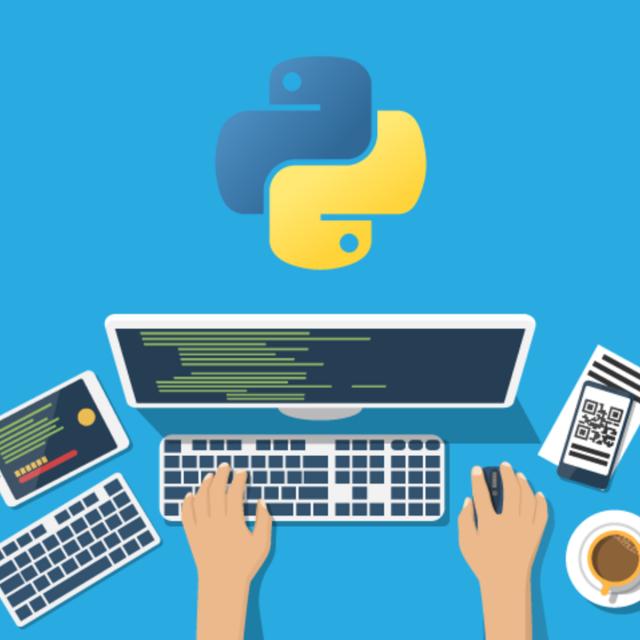
This is the first course in the four-course specialization Python Data Products for Predictive Analytics, introducing the basics of reading and manipulating datasets in Python. In this course, you will learn what a data product is and go through several Python libraries to perform data retrieval, processing, and visualization.

Class Deals by MOOC List - Click here and see Coursera's Active Discounts, Deals, and Promo Codes.

This course will introduce you to the field of data science and prepare you for the next three courses in the Specialization: Design Thinking and Predictive Analytics for Data Products, Meaningful Predictive Modeling, and Deploying Machine Learning Models. At each step in the specialization, you will gain hands-on experience in data manipulation and building your skills, eventually culminating in a capstone project encompassing all the concepts taught in the specialization.

What You Will Learn

  • Develop data strategy and process for how data will be generated, collected, and consumed
  • Load and process formatted datasets such as CSV and JSON.
  • Deal with data in various formats (e.g. timestamps, strings) and filter and “clean” datasets by removing outliers etc.
  • Basic experience with data processing libraries such as numpy and data ingestion with urllib, requests

Course 1 of 4 in the Python Data Products for Predictive Analytics Specialization.

Syllabus

WEEK 1
Introduction to Data Products
This week, we will go over the syllabus and set you up with the course materials and software. We will introduce you to data products and refresh your memory on Python and Jupyter notebooks.

WEEK 2
Reading Data in Python
This week, we will learn how to load in datasets from CSV and JSON files. We will also practice manipulating data from these datasets with basic Python commands.

WEEK 3
Data Processing in Python
This week, our goal is to understand how to clean up a dataset before analyzing it. We will go over how to work with different types of data, such as strings and dates.

WEEK 4
Python Libraries and Toolkits
In this last week, we will get a sense of common libraries in Python and how they can be useful. We will cover data visualization with numpy and MatPlotLib, and also introduce you to the basics of webscraping with urllib and BeautifulSoup.

WEEK 5
Final Project
Create your own Jupyter notebook with a dataset of your own choosing and practice data manipulation. Show off the skills you've learned and the libraries you know about in this project. We hope you enjoyed the course, and best of luck in your future learning!

Go to Class
MOOC List is learner-supported. When you buy through links on our site, we may earn an affiliate commission.

Related Courses

Algorithmic Thinking (Part 1) (Coursera) Coursera
Rice University

Algorithmic Thinking (Part 1) (Coursera)

Experienced Computer Scientists analyze and solve computational problems at a level of abstraction that is beyond that of any particular programming language. This two-part class is designed to train students in the mathematical concepts and process of "Algorithmic Thinking", allowing them to build simpler, more efficient solutions to computational problems.

Oct 5th 2026
4 Weeks
Estruturas de dados Python (Coursera) Coursera
University of Michigan

Estruturas de dados Python (Coursera)

Este curso apresentará as estruturas de dados centrais da linguagem de programação Python. Vamos superar os fundamentos da programação de procedimentos e explorar como podemos usar as estruturas de dados integradas do Python, como listas, dicionários e tuplas, para realizar análises de dados cada vez mais complexas. Este curso cobrirá os capítulos 6 a 10 do livro “Python para Todos”. Este curso aborda o Python 3.

Oct 5th 2026
5-12 Weeks
Python Data Structures (Coursera) Coursera
University of Michigan

Python Data Structures (Coursera)

This course will introduce the core data structures of the Python programming language. We will move past the basics of procedural programming and explore how we can use the Python built-in data structures such as lists, dictionaries, and tuples to perform increasingly complex data analysis. This course will cover Chapters 6-10 of the textbook “Python for Everybody”. This course covers Python 3.

Sep 28th 2026
5-12 Weeks
Global Warming II: Create Your Own Models in Python (Coursera) Coursera
University of Chicago

Global Warming II: Create Your Own Models in Python (Coursera)

This class provides a series of Python programming exercises intended to explore the use of numerical modeling in the Earth system and climate sciences. The scientific background for these models is presented in a companion class, Global Warming I: The Science and Modeling of Climate Change. This class assumes that you are new to Python programming (and this is indeed a great way to learn Python!), but that you will be able to pick up an elementary knowledge of Python syntax from another class or from on-line tutorials.

Oct 5th 2026
5-12 Weeks
Math for MBA and GMAT Prep (Coursera) Coursera
Emory University

Math for MBA and GMAT Prep (Coursera)

This course gives participants a basic understanding of statistics as they apply in business situations. A fair share of students considering MBA programs come from backgrounds that do not include a large amount of training in mathematics and statistics. Often, students find themselves at a disadvantage when they apply for or enroll in MBA programs. This course will give you the tools to understand how these business statistics are calculated for navigating the built-in formulas that are included in Excel, but also how to apply these formulas in an range of business settings and situations.

Oct 5th 2026
5-12 Weeks
Use Tableau for your Data Science Workflow (Coursera) Coursera
Edureka

Use Tableau for your Data Science Workflow (Coursera)

Learn Tableau fundamentals, advanced visualizations, and integration with data science tools. Elevate your skills in creating impactful dashboards. Enroll now for hands-on experience and master the art of data storytelling. Unlock the potential for advanced analytics, exploring correlations and trends within your data. Build interactive dashboards that tell compelling data stories, utilizing filters, parameters, and actions for user engagement.

Oct 5th 2026
1 Week
3D Data Visualization for Science Communication (Coursera) Coursera
University of Illinois at Urbana-Champaign

3D Data Visualization for Science Communication (Coursera)

This course is an introduction to 3D scientific data visualization, with an emphasis on science communication and cinematic design for appealing to broad audiences. You will develop visualization literacy, through being able to interpret/analyze (read) visualizations and create (write) your own visualizations.

Oct 5th 2026
4 Weeks
Network Analysis in Systems Biology (Coursera) Coursera
Icahn School of Medicine at Mount Sinai

Network Analysis in Systems Biology (Coursera)

An introduction to data integration and statistical methods used in contemporary Systems Biology, Bioinformatics and Systems Pharmacology research. The course covers methods to process raw data from genome-wide mRNA expression studies (microarrays and RNA-seq) including data normalization, differential expression, clustering, enrichment analysis and network construction. The course contains practical tutorials for using tools and setting up pipelines, but it also covers the mathematics behind the methods applied within the tools.

Sep 28th 2026
5-12 Weeks
Build LLM Apps with LangChain.js (Coursera) Coursera
DeepLearning.AI

Build LLM Apps with LangChain.js (Coursera)

JavaScript is the world’s most popular programming language, and now developers can program in JavaScript to build powerful LLM apps. This course will show webdevs how to expand their toolkits with LangChain.js, a popular JavaScript framework for building with LLMs, and will cover useful concepts for creating powerful, context-aware applications.

Oct 5th 2026
1 Week
Introducción a la programación en Python I: Aprendiendo a programar con Python (Coursera) Coursera
Pontificia Universidad Católica de Chile

Introducción a la programación en Python I: Aprendiendo a programar con Python (Coursera)

Decía Steve Jobs que “todo el mundo debería aprender a programar un ordenador porque esto te ayuda a pensar”. Hoy en día la programación es una herramienta fundamental para el desarrollo de la tecnología moderna. Este curso te introduce en el mundo de la programación en el lenguaje Python.

Oct 5th 2026
5-12 Weeks