EdX

AI Chatbots without Programming (edX)

Offered by IBM,
AI Chatbots without Programming (edX)

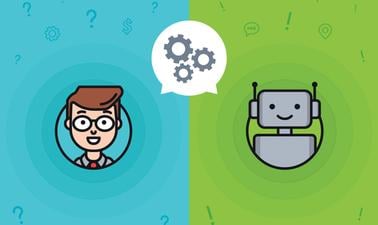
Chatbots are increasingly in demand among global businesses. This course will teach you how to build, analyze, deploy and monetize chatbots - with the help of IBM Watson and the power of AI. Please Note: Learners who successfully complete this IBM course can earn a skill badge — a detailed, verifiable and digital credential that profiles the knowledge and skills you’ve acquired in this course. Enroll to learn more, complete the course and claim your badge!

Class Deals by MOOC List - Click here and see EdX's Active Discounts, Deals, and Promo Codes.

Special Offer : This course includes a great offer from IBM: One year of Watson Assistant services to power 10 chatbots at no charge. The perfect way to kickstart your chatbot building business!
Chatbots are one of the most exciting and in-demand topics in tech. Businesses around the world are increasingly showing an interest in their potential for cost-saving and improving customer service availability.
In this course, you'll learn how to build chatbots powered by Watson and how to approach making money by selling chatbots to clients. We'll cover ways to sell chatbots to prospective clients online and offline. We'll explore how to plan and build chatbots using a visual tool provided by IBM. We'll offer methods for testing, analyzing, and improving your chatbots. And we'll teach you how to deploy your chatbots to websites via a handy WordPress plugin.
Leveraging the AI power of Watson Assistant, you will be able to accomplish all this without the need to write any code!

This course is part of the:

What you'll learn

  • What chatbots are and why they are revolutionary;
  • What WatsonAssistant is and how you can leverage its AI capabilities;
  • The key principles of good chatbot design;
  • How to create your own chatbot without the need to write any code;
  • How to deploy your chatbot on WordPress sites;
  • How to enroll as an IBM Partner if you intend to build chatbots for customers;
  • How to make money with chatbots.

Syllabus

Module0 - Introduction to Chatbots

  • Introduction to making money with Chatbots
  • Becoming an IBM Partner
  • Selling clients on the idea
  • Finding new clients locally and online

Module 1 - Introduction to Chatbots

  • What are chatbots?
  • The emergence of Messengers and AI
  • Who are chatbots for?
  • The chatbot we're going to build

Module 2 - Introduction to Watson Assistant (formerly Conversation)

  • WatsonAssistant components
  • Intents
  • Entities
  • Dialog
  • Dos and Dont's of dialog design

Module 3 -Building Our Chatbot: Intents and Entities

  • Creating a workspace
  • Defining Chit Chat intents
  • Defining Domain-Specific intents
  • Defining entities

Module 4 -Building Our Chatbot Dialog

  • The default Welcome and Anything else nodes
  • Creating Chit Chat dialog
  • Simple conditions and responses
  • Handling complex dialog flow
  • Trying out and exporting our chatbot

Module 5 - Deploying Our Chatbot on WordPress

  • Deploying our chatbot on WordPress
  • Installing and configuring the Watson Assistant plugin
  • Finding and fixing problems
  • More advanced concepts
  • Analyzing chatbot conversations
Go to Class
MOOC List is learner-supported. When you buy through links on our site, we may earn an affiliate commission.

Related Courses

Programming for Data Science (edX) EdX
University of Adelaide,AdelaideX

Programming for Data Science (edX)

Learn how to apply fundamental programming concepts, computational thinking and data analysis techniques to solve real-world data science problems. There is a rising demand for people with the skills to work with Big Data sets and this course can start you on your journey through our Big Data MicroMasters program towards a recognised credential in this highly competitive area. Using practical activities you will learn how digital technologies work and will develop your coding skills through engaging and collaborative assignments.

Self Paced
Self-Paced
Introduction to the Internet of Things (edX) EdX
Universitat Politècnica de València,UPValenciaX

Introduction to the Internet of Things (edX)

This is a preliminary course in which we deal with the basics of electronics and programming using Arduino and ESP boards. Internet of Things (IoT) is the present and the future of technology. Either, if you have none, few or some experience with electronics and you want to develop it projects this course will give you the necessary kick start to start creating amazing devices capable of sensing, controlling physical signals.

Self Paced
Self-Paced
AI in Practice: Preparing for AI (edX) EdX
Delft University of Technology,DelftX

AI in Practice: Preparing for AI (edX)

Learn to recognize and understand the implications of Artificial Intelligence for organizations, and the importance of compliance and ethics when AI is applied in practice. This course is not about difficult algorithms and complex programming; it is a course for anyone interested in learning about the benefits and implications of AI when applied in practical settings.

Self Paced
Self-Paced
Introducción a la programación en C: Funciones y punteros (edX) EdX
Universidad Autonoma de Madrid

Introducción a la programación en C: Funciones y punteros (edX)

En este curso aprenderás cómo hacer programas modulares a través de funciones y punteros en el lenguaje de programación C, uno de los más utilizados. Este curso en línea te permitirá aprender más conceptos para ampliar tus habilidades de programación en el lenguaje C. Ahora resolveremos los problemas de forma modular, dividiendo el código en pequeñas partes definidas como funciones.

Self Paced
Self-Paced
HTML5 Apps and Games (edX) EdX
World Wide Web Consortium - W3C,W3Cx

HTML5 Apps and Games (edX)

Today, developers are increasingly moving from native to HTML5-based apps. Increase your ability to design and deliver innovative services on the Web! Want to learn advanced HTML5 tips and techniques? This is the course for you! Find out more about the powerful Web features that will help you create great content and apps.

Self Paced
Self-Paced
Computing in Python I: Fundamentals and Procedural Programming (edX) EdX
Georgia Institute of Technology,GTx

Computing in Python I: Fundamentals and Procedural Programming (edX)

Learn the fundamentals of computing in Python, including variables, operators, and writing and debugging your own programs. This course starts from the beginning, covering the basics of how a computer interprets lines of code; how to write programs, evaluate their output, and revise the code itself; how to work with variables and their changing values; and how to use mathematical, boolean, and relational operators.

Self Paced
Self-Paced
Introduction to Object-Oriented Programming with Java II: Object-Oriented Programming and Algorithms (edX) EdX
Georgia Institute of Technology,GTx

Introduction to Object-Oriented Programming with Java II: Object-Oriented Programming and Algorithms (edX)

Learn the basics of object-oriented programming and algorithms. Students will build on the skills learned from “Introduction to Object-Oriented Programming with Java I: Foundations and Syntax Basics” and learn the basics of writing classes that serve as blueprints of concepts or objects that are represented in a programming problem. Students will leverage the concepts of inheritance, interfaces, and polymorphism to program reusability and flexibility in classes. Finally, students will gain experience walking through and analyzing algorithms that are applied on data (including objects) in many object-oriented programs.

Self Paced
Self-Paced
Python for Data Science (edX) EdX
University of California, San Diego,UC San DiegoX

Python for Data Science (edX)

Learn to use powerful, open-source, Python tools, including Pandas, Git and Matplotlib, to manipulate, analyze, and visualize complex datasets. In the information age, data is all around us. Within this data are answers to compelling questions across many societal domains (politics, business, science, etc.). But if you had access to a large dataset, would you be able to find the answers you seek?

Self Paced
Self-Paced