Russian Language for Beginners (Coursera)

Russian Language for Beginners (Coursera)

Have you often heard that learning Russian is very difficult? We want to show you that Russian is not difficult at all if you study it systematically, as it is presented in this course. This express course has a clear structure of presentation of the material, following which you will master the basic grammar and vocabulary step by step to start speaking Russian.

Class Deals by MOOC List - Click here and see Coursera's Active Discounts, Deals, and Promo Codes.

This course will allow you to master the basics of Russian grammar in the scope of the A1 level exam and even some additional topics. This Russian Language course allows you to start reading and speaking Russian, even if you have never studied Russian before. The course is rather grammatical, that is, after studying it, you will master many different grammatical constructions, this will allow you to easily compose phrases and talk about anything you want to talk about.
The course is well illustrated, it will make you learning Russian in a fun and easy way. The course has a communicative orientation: this means that the new grammar and vocabulary is presented in the dialogues, in which you can also easily take part, having mastered the material of each lesson.

What You Will Learn

  • Learn to read in Russian
  • Learn to listen and understand the Russian language
  • Learn to speak Russian at the A1 level

Syllabus

WEEK 1
Russian phonetic system. Basic concepts of Russian grammar. Personal and possessive pronouns. Adjectives
You will learn the basics of Russian phonetics and, as a result, you will learn how to read Russian letters, as well as learn some new words. You will learn the basics of Russian grammar: the gender of nouns, personal and possessive pronouns, and you will also learn how to ask simple questions (who? what?) and how to answer them. Finally, you will learn what adjectives are in Russian and how we can describe the objects around us.

WEEK 2
The present tense form of verbs. Prepositional case of nouns
We will start talking about the system of cases of singular nouns in Russian language. We will start with the study of case 6. You will learn how to say: a) where you live, where you study, where you work; b) what you think or dream about; c) how to say that you get somewhere on transport. You will learn about the present tense forms of verbs. You will be able to tell what you are doing every day/at the moment.

WEEK 3
Accusative case of nouns. The past tense form of verbs
We continue to talk about cases in Russian (case 4). You will learn how to say: a) what you like to watch, listen to, read; c) where you like to go/drive; c) what and when you do (on what days of the week). We will talk about how to use the past tense forms of verbs. You will be able to tell what you did yesterday/before: where you studied, worked and so on.

WEEK 4
Genitive and Dative cases of nouns
In this lesson, you will learn how to use the forms of of nouns of Genetive case. You will learn how to say: a) that you have a brother/sister/car; b) what you do not have/ We will also learn other constructions. Case 3. You will learn to say: a) how old you are; b) who you want to give something to/say something to; c) what you like or don't like to do.

WEEK 5
The instrumental case of nouns. Plural of nouns
Case 5. You will learn how to say: a) what and with whom you like to do; b) who you want to be and so on. We will repeat when and in what situations we use different case forms and learn how to use the plural forms of nouns.

WEEK 6
Imperfective and perfective verbs in past, present and future tenses forms
You will learn what the verb aspect is: how can we tell about an action a) in the meaning of a process/result, b) if you do something once or many times, and what verb forms we use for it. You will learn how to use Perfective and Imperfective verbs in the present, past, and future tenses.


Go to Class
MOOC List is learner-supported. When you buy through links on our site, we may earn an affiliate commission.

Related Courses

Low Intermediate English: Help & Information (Coursera) Coursera
Voxy

Low Intermediate English: Help & Information (Coursera)

In this course, you will learn important language for asking for help, giving and understanding directions, and sharing your opinions. Learning activities in this course will take place on Voxy, an engaging language learning platform that automatically adapts to your current level and your performance across reading, listening, speaking, grammar, and vocabulary skills so that every lesson is optimized for rapid improvement.

Sep 21st 2026
5-12 Weeks
Introduction to Comparative Indo-European Linguistics (Coursera) Coursera
Leiden University

Introduction to Comparative Indo-European Linguistics (Coursera)

Build your knowledge of Indo-European languages, how they changed through time, and how to reconstruct ancient languages. Every language belongs to a language family; a group of languages that are genetically related to each other. Indo-European is the name of the language family to which English belongs, along with many sub-families such as Germanic languages and Romance languages.

Sep 28th 2026
5-12 Weeks
Writing your World: Finding yourself in the academic space (Coursera) Coursera
University of Cape Town

Writing your World: Finding yourself in the academic space (Coursera)

Throughout the world, writing serves to express, record and even create meaningful moments. In academic spaces, writing becomes the bridge between ourselves and the world of ideas. In this course, we provide practical insights into how to write an academic essay. We show you how to develop the academic skills needed to be a competent academic writer. You will have an opportunity to engage with texts written by academics, and to see how some of the ideas in these texts are used by students in constructing an academic essay.

Sep 28th 2026
4 Weeks
Adjectives and Adjective Clauses (Coursera) Coursera
University of California, Irvine

Adjectives and Adjective Clauses (Coursera)

Being able to adeptly use adjective clauses in speaking and writing is useful for upper level English learners. Adjectives and adjective clauses are very common in English, so students need to be able to understand them when they see them or hear them. Students often struggle to bring complexity to their speaking and writing and adjective clauses can be a great way to do this.

Sep 21st 2026
4 Weeks
Low Intermediate English: Technology (Coursera) Coursera
Voxy

Low Intermediate English: Technology (Coursera)

Living in the digital age means not only having a lot of technology, but talking about it a lot too. In this course, we’re going to focus on the technology and devices that we use in our daily lives. Learning activities in this course will take place on Voxy, an engaging language learning platform that automatically adapts to your current level and your performance across reading, listening, speaking, grammar, and vocabulary skills so that every lesson is optimized for rapid improvement.

Sep 21st 2026
5-12 Weeks
English Composition I (Coursera) Coursera
Duke University

English Composition I (Coursera)

You will gain a foundation for college-level writing valuable for nearly any field. Students will learn how to read carefully, write effective arguments, understand the writing process, engage with others' ideas, cite accurately, and craft powerful prose. Course Learning Objectives: summarize, analyze, question, and evaluate written and visual texts; argue and support a position; recognize audience and disciplinary expectations; identify and use the stages of the writing process; identify characteristics of effective prose; apply proper citation practices; discuss applying your writing knowledge to other writing occasions

Sep 28th 2026
5-12 Weeks
Low Intermediate English: Shopping & Customer Service (Coursera) Coursera
Voxy

Low Intermediate English: Shopping & Customer Service (Coursera)

In this course, you will learn important language to describe how you shop, review what you’ve bought, and assist customers. Learning activities in this course will take place on Voxy, an engaging language learning platform that automatically adapts to your current level and your performance across reading, listening, speaking, grammar, and vocabulary skills so that every lesson is optimized for rapid improvement.

Sep 21st 2026
5-12 Weeks
Verb Tenses and Passives (Coursera) Coursera
University of California, Irvine

Verb Tenses and Passives (Coursera)

This is the first course in the Learn English: Advanced Grammar and Punctuation specialty. In this course, you will review the verb tenses that you learned in beginning English classes and learn about a few tenses you may not know very well. In all, you'll cover all 12 of the English verb tenses and passive verb forms. Most importantly, you'll learn how to blend these tenses, which is what native speakers frequently do. This course is vital to your becoming a more fluent English speaker.

Sep 14th 2026
4 Weeks
Children Acquiring Literacy Naturally (Coursera) Coursera
University of California, Santa Cruz

Children Acquiring Literacy Naturally (Coursera)

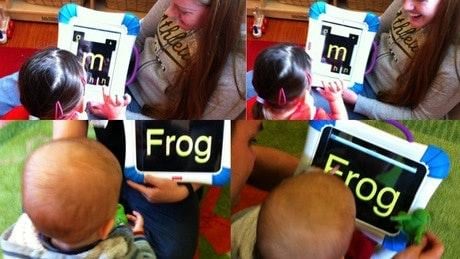
In this short course you will explore the possibility that children might acquire written language in a way that is similar to how they acquire spoken language—without instruction. You will encounter various aspects of behavioral science and technology that are relevant to this proposition. You will have the opportunity to learn the the perceptual, cognitive, and neurological capacities of children during their first years of life. You will advance your understanding of children and how they learn language. You will also be more attuned to current advances in the technology of human machine interactions, and what these phenomena imply for learning to read at an early age.

Sep 28th 2026
3 Weeks
The Piano Sonata: Russian and 20th-21st Century Composers (Coursera) Coursera
University of Michigan

The Piano Sonata: Russian and 20th-21st Century Composers (Coursera)

In this course, you’ll review sonata form and learn how the piano sonata was revitalized in the 20th century, with a particular attention to composers from Russia, where the sonata was an especially popular and successful genre. You’ll study some of the most influential piano sonatas of the 20th century, in both Neo-Classical and avant-garde styles. This course will also expose you to a variety of lesser-known and more recent compositions, showing how the piano sonata genre continues to expand and to thrive.

Sep 14th 2026
4 Weeks
General Academic English (Coursera) Coursera
Tsinghua University

General Academic English (Coursera)

Do you want to read and write better in English? Welcome to our course. The course consists of 6 units with different topics: art, man and nature, social issues, engineering and technology, psychology, economics and management. From this course, you will have a good knowledge of general academic English learning skills. We invite you to learn with our teachers and friends from different countries in the videos.

Sep 14th 2026
5-12 Weeks