Programming Fundamentals in Kotlin (Coursera)

Offered by Meta,
Programming Fundamentals in Kotlin (Coursera)

Practice and expand on the fundamentals of programming that are core to any language as well as the unique aspects of Kotlin syntax. You will work with data types, functions, conditionals, operators, collections-arrays, variables and loops.

Class Deals by MOOC List - Click here and see Coursera's Active Discounts, Deals, and Promo Codes.

Furthermore, you will declare and initialize different types of variables and explain their scope as well as create arrays and collections in Kotlin. You’ll create control flow patterns using conditionals and loops. There will be opportunities to practice using structs and classes while considering best cases for both. Discover deeper ways to use objects in Kotlin through exploring interfaces and classes.
After completing this course, you will be able to:
• Describe basic types and variables
• Explain numbers in Kotlin
• Explain what conditions are
• Describe how to use loops
• Explain the concept of a function 
• Differentiate between a parameter and an argument
• Explain that a function can return a value and describe how it works
• Explain the difference between a class, an object and a type
• Differentiate between various visibility modifiers
• Describe the use of collections in programming
• Identify which collection type to use in any given situation
• Explain the difference between List, Set and Map
• Synthesize the skills you gained from the course to create code for the Bank Account project.
This is a beginner course for learners who would like to prepare themselves for a career as an Android developer using Kotlin. To succeed in this course, you do not need prior web development experience, only basic internet navigation skills and an eagerness to get started with coding.
This course is part of the Meta Android Developer Professional Certificate.

Syllabus

WEEK 1
Introduction to Programming in Kotlin
In this module, you will start with an overview of programming in Kotlin. Once you are more familiar with the careers and usages of Kotlin, you will move on to learn about programming in Kotlin, discovering and exploring the fundamental concepts that underpin the Kotlin programming language.

WEEK 2
Functions, classes and objects
In this module, you will learn about functions, classes and objects. You will discover more about a function and how programs are constructed from functions. You will also learn how use a class, object and type while you are writing code. Furthermore, you will practice how to use classes, objects and types.

WEEK 3
Advanced classes, nullability and collections
In this module, you will learn more about advanced classes and objects in Kotlin. You will learn about List, Set and Map and how these are used while writing code in Kotlin. You will also learn about collections and when to use them.

WEEK 4
Graded assessment
In this module, you'll learn about the graded assessment. After you complete the units in this module, you'll synthesize the skills you gained from the course to create code for the "Bank Account" project.
Go to Class
MOOC List is learner-supported. When you buy through links on our site, we may earn an affiliate commission.

Related Courses

Python Data Structures (Coursera) Coursera
University of Michigan

Python Data Structures (Coursera)

This course will introduce the core data structures of the Python programming language. We will move past the basics of procedural programming and explore how we can use the Python built-in data structures such as lists, dictionaries, and tuples to perform increasingly complex data analysis. This course will cover Chapters 6-10 of the textbook “Python for Everybody”. This course covers Python 3.

Sep 28th 2026
5-12 Weeks
Programming with Scratch (Coursera) Coursera
The Hong Kong University of Science and Technology - HKUST

Programming with Scratch (Coursera)

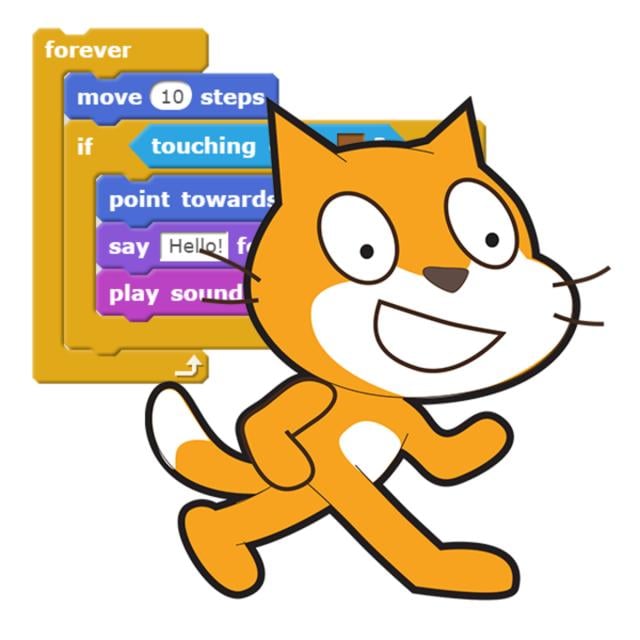
Learning coding is not only about understanding the programming language being used, but also developing important computational thinking skills, which are useful for problem solving across many disciplinary areas. In this course, students will learn basic programming skills by creating interactive storybooks, animations, and games with Scratch, which is a block-based visual programming language for anyone new to coding.

Sep 28th 2026
5-12 Weeks
Ajax Basics (Coursera) Coursera
Board Infinity

Ajax Basics (Coursera)

This Ajax Basics course is designed for beginners who want to learn how to build web applications that dynamically update content without reloading the entire page. In this course, you will learn the fundamentals of Ajax, including its features, advantages, and common usage scenarios.

Oct 5th 2026
3 Weeks
Programming Mobile Applications for Android Handheld Systems: Part 1 (Coursera) Coursera
University of Maryland, College Park

Programming Mobile Applications for Android Handheld Systems: Part 1 (Coursera)

This course introduces you to the design and implementation of Android applications for mobile devices. You will develop an app from scratch, assuming a basic knowledge of Java, and learn how to set up Android Studio, work with various Activities and create simple user interfaces to make your apps run smoothly.

Sep 28th 2026
5-12 Weeks
An Introduction to Interactive Programming in Python (Part 1) (Coursera) Coursera
Rice University

An Introduction to Interactive Programming in Python (Part 1) (Coursera)

This two-part course is designed to help students with very little or no computing background learn the basics of building simple interactive applications. Our language of choice, Python, is an easy-to learn, high-level computer language that is used in many of the computational courses offered on Coursera. To make learning Python easy, we have developed a new browser-based programming environment that makes developing interactive applications in Python simple.

Oct 5th 2026
5-12 Weeks
Computer Science: Algorithms, Theory, and Machines (Coursera) Coursera
Princeton University

Computer Science: Algorithms, Theory, and Machines (Coursera)

This course introduces the broader discipline of computer science to people having basic familiarity with Java programming. It covers the second half of our book Computer Science: An Interdisciplinary Approach (the first half is covered in our Coursera course Computer Science: Programming with a Purpose, to be released in the fall of 2018). Our intent is to demystify computation and to build awareness about the substantial intellectual underpinnings and rich history of the field of computer science.

Oct 5th 2026
5-12 Weeks
Introdução ao Desenvolvimento de Aplicativos Android (Coursera) Coursera
Universidade Estadual de Campinas - UNICAMP

Introdução ao Desenvolvimento de Aplicativos Android (Coursera)

Este curso tem como objetivo propiciar um primeiro contato com a Programação para Dispositivos Móveis que operam na plataforma Android. O Android Studio será utilizado como ambiente de desenvolvimento desde o início do curso e você receberá dicas de como obter ajuda quando alguma tarefa estiver consumindo mais tempo do que o necessário. Ao solucionar problemas por conta própria, você irá adquirir a autonomia necessária para concluir projetos de programação.

Oct 5th 2026
5-12 Weeks
Programming Languages, Part A (Coursera) Coursera
University of Washington

Programming Languages, Part A (Coursera)

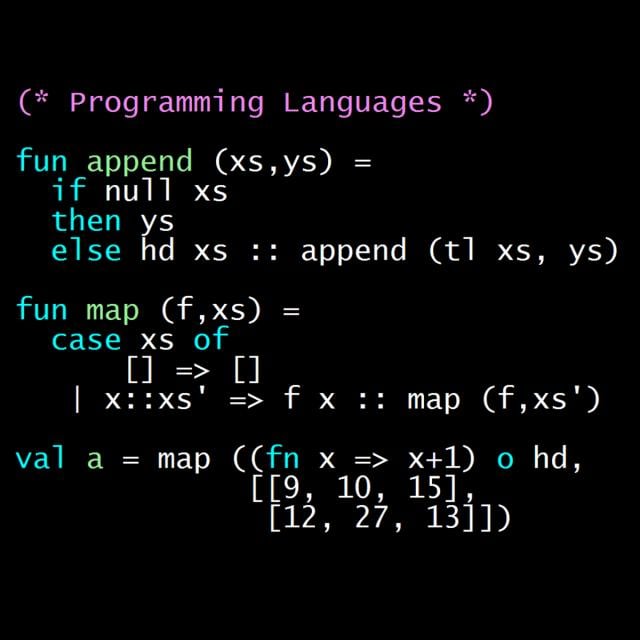
This course is an introduction to the basic concepts of programming languages, with a strong emphasis on functional programming. The course uses the languages ML, Racket, and Ruby as vehicles for teaching the concepts, but the real intent is to teach enough about how any language “fits together” to make you more effective programming in any language -- and in learning new ones.

Oct 5th 2026
5-12 Weeks
Estruturas de dados Python (Coursera) Coursera
University of Michigan

Estruturas de dados Python (Coursera)

Este curso apresentará as estruturas de dados centrais da linguagem de programação Python. Vamos superar os fundamentos da programação de procedimentos e explorar como podemos usar as estruturas de dados integradas do Python, como listas, dicionários e tuplas, para realizar análises de dados cada vez mais complexas. Este curso cobrirá os capítulos 6 a 10 do livro “Python para Todos”. Este curso aborda o Python 3.

Oct 5th 2026
5-12 Weeks
An Introduction to Interactive Programming in Python (Part 2) (Coursera) Coursera
Rice University

An Introduction to Interactive Programming in Python (Part 2) (Coursera)

This two-part course is designed to help students with very little or no computing background learn the basics of building simple interactive applications. Our language of choice, Python, is an easy-to learn, high-level computer language that is used in many of the computational courses offered on Coursera. To make learning Python easy, we have developed a new browser-based programming environment that makes developing interactive applications in Python simple.

Oct 5th 2026
4 Weeks