EdX

Pensamiento del Papa Francisco (edX)

Pensamiento del Papa Francisco (edX)

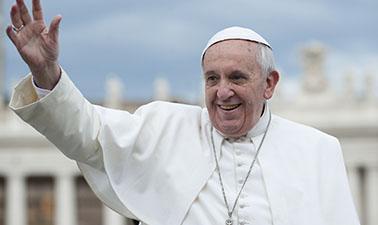
Ante el auge a nivel mundial que está presentando el pensamiento del Papa Francisco, urge un estudio teológico sobre su pensamiento social. Analizar el contexto próximo del Papa Francisco y proponer alternativas de acción. Este curso teórico práctico, pretende hacer una aproximación reflexiva y crítica al pensamiento social del Papa Francisco desde la teología, teniendo como marco doctrinal de referencia, la doctrina social de la Iglesia, la realidad latinoamericana y mundial.

Class Deals by MOOC List - Click here and see EdX's Active Discounts, Deals, and Promo Codes.

El participante tendrá la oportunidad de:

  • Conocer el pensamiento social del Papa Francisco.
  • Analizar e interpretar el pensamiento social de la Iglesia.
  • Comprender las encíclicas sociales de los Papas desde, León XIII hasta nuestros días.
  • Articular el pensamiento de la Iglesia latinoamericana con el pensamiento del Papa.

Course Syllabus

Módulo Introductorio
Funcionamiento plataforma y herramientas del curso

Módulo 1
Aspectos generales del pensamiento social de la Iglesia: fundamentos
Aspectos generales del pensamiento social de la Iglesia: fuentes y recorrido
Aspectos generales del pensamiento social de la Iglesia latinoamericana: Conferencias Episcopales de Medellín, Puebla, Santo Domingo y Aparecida

Módulo 2
El contexto de Francisco, el Papa Suramericano: Los desafíos del mundo
El contexto de Francisco, el Papa Suramericano: Los desafíos de América Latina

Módulo 3
El pensamiento social del Papa Francisco en sus documentos eclesiales: Encíclicas Lumen Fidei y Laudato sí
El pensamiento social del Papa Francisco en concordancia con el pensamiento social de la Iglesia
El pensamiento social del Papa Francisco en sus documentos eclesiales: Exhortaciones Apostólicas Evangelii Gaudium, Amoris Laetitia, y Bula Misericordiae Vultus
El pensamiento social del Papa Francisco en concordancia con el pensamiento social de la Iglesia latinoamericana


Go to Class
MOOC List is learner-supported. When you buy through links on our site, we may earn an affiliate commission.

Related Courses

Philosophy, Science and Religion: Science and Philosophy (Coursera) Coursera
University of Edinburgh

Philosophy, Science and Religion: Science and Philosophy (Coursera)

Philosophy, Science and Religion mark three of the most fundamental modes of thinking about the world and our place in it. Are these modes incompatible? Put another way: is the intellectually responsible thing to do to ‘pick sides’ and identify with one of these approaches at the exclusion of others? Or, are they complementary or mutually supportive? As is typical of questions of such magnitude, the devil is in the details. For example, it is important to work out what is really distinctive about each of these ways of inquiring about the world. In order to gain some clarity here, we’ll be investigating what some of the current leading thinkers in philosophy, science and religion are actually doing.

Oct 5th 2026
5-12 Weeks
East Asian Religions & Ecology (Coursera) Coursera
Yale University

East Asian Religions & Ecology (Coursera)

At first glance the fields of religion and ecology may seem and unlikely pairing, but a deeper consideration reveals the two have a great deal to contribute to one another and are indeed inextricably linked. Religions recognize the unity and interdependence of humans with nature. Ecological sciences affirm this deep interconnection with the natural world. This partnership can inspire work for the wellbeing of the Earth community

Sep 28th 2026
5-12 Weeks
Découvrir l'anthropologie (edX) EdX
LouvainX,Université Catholique de Louvain - UCL

Découvrir l'anthropologie (edX)

Expérimentez un autre regard sur les sociétés humaines avec des chercheurs en anthropologie prospective. Comment les humains s’organisent-ils en sociétés ? Qu’appelle-t-on « familles » et comment se constituent-elles ? Quel regard et quels types d’analyse l’anthropologie propose-t-elle sur les systèmes de parenté, symboliques, politiques, religieux ?

Self Paced
Self-Paced
Re-imaging God in Korean Context (Coursera) Coursera
Yonsei University

Re-imaging God in Korean Context (Coursera)

This course will be an overview of a development of the theological methods in relation to Korea’s cultural context. Completing the course, the learners can understand cultural influences on the dynamic development of Korean churches and indigenous theology; they can also gain an insight into their own image of God and theological imagination in their own cultural context.

Oct 12th 2026
5-12 Weeks
Søren Kierkegaard - Subjectivity, Irony and the Crisis of Modernity (Coursera) Coursera
University of Copenhagen

Søren Kierkegaard - Subjectivity, Irony and the Crisis of Modernity (Coursera)

In this course created by former associate professor at the Søren Kierkegaard Research Centre, Jon Stewart, we will explore how Kierkegaard deals with the problems associated with relativism, the lack of meaning and the undermining of religious faith that are typical of modern life. His penetrating analyses are still highly relevant today and have been seen as insightful for the leading figures of Existentialism, Post-Structuralism and Post-Modernism.

Oct 12th 2026
5-12 Weeks
South Asian Religions & Ecology (Coursera) Coursera
Yale University

South Asian Religions & Ecology (Coursera)

At first glance the fields of religion and ecology may seem and unlikely pairing, but a deeper consideration reveals the two have a great deal to contribute to one another and are indeed inextricably linked. Religions recognize the unity and interdependence of humans with nature. Ecological sciences affirm this deep interconnection with the natural world. This partnership can inspire work for the wellbeing of the Earth community

Sep 28th 2026
5-12 Weeks
Introduction to Religions & Ecology (Coursera) Coursera
Yale University

Introduction to Religions & Ecology (Coursera)

At first glance the fields of religion and ecology may seem and unlikely pairing, but a deeper consideration reveals the two have a great deal to contribute to one another and are indeed inextricably linked. Religions recognize the unity and interdependence of humans with nature. Ecological sciences affirm this deep interconnection with the natural world. This partnership can inspire work for the wellbeing of the Earth community
.

Sep 28th 2026
5-12 Weeks
Structuring Values in Modern China (Coursera) Coursera
The Chinese University of Hong Kong

Structuring Values in Modern China (Coursera)

This sequence of four courses will propose a multi-disciplinary approach to the study of Chinese cultural history conceived of as a succession of modes of rationality (philosophical, bureaucratic, and economic). The focus will be on the moments of paradigm shift from one mode of rationality to another. For each of these moments, cultural facts and artifacts—thought, literature, ritual—will be examined in relationship to changing social, political, and economic systems.

Oct 12th 2026
5-12 Weeks
Religious Literacy: Traditions and Scriptures (edX) EdX
HarvardX,Harvard University

Religious Literacy: Traditions and Scriptures (edX)

Learn how to better understand the rich and complex ways that religions function in historic and contemporary contexts. The study of religion is the study of a rich and fascinating dimension of human experience that includes but goes well beyond beliefs and ritual practices. In this religion course, learners explore case studies about how religions are internally diverse, how they evolve and change through time, and how religions are embedded in all dimensions of human experience.

Self Paced
Self-Paced
The Science of Religion (edX) EdX
The University of British Columbia,UBCx

The Science of Religion (edX)

What is religion? Are we wired to believe? Does science have the answers? Join us on a journey to the origins of religion and spirituality. Drawing on new scientific advances, this religion course examines foundational questions about the nature of religious belief and practice.

This course is archived
5-12 Weeks
Intellectual Humility: Science (Coursera) Coursera
University of Edinburgh

Intellectual Humility: Science (Coursera)

It’s clear that the world needs more intellectual humility. But how do we develop this virtue? And why do so many people still end up so arrogant? Do our own biases hold us back from becoming as intellectually humble as we could be—and are there some biases that actually make us more likely to be humble? Which cognitive dispositions and personality traits give people an edge at being more intellectually humble - and are they stable from birth, learned habits, or something in between? And what can contemporary research on the emotions tell us about encouraging intellectual humility in ourselves and others?

Oct 12th 2026
4 Weeks