Introduction to Software Development and Applications (Coursera)

Introduction to Software Development and Applications (Coursera)

The primary objectives of this course are to introduce software engineering techniques and their application to real-world business problems. You will be equipped with practical design and programming techniques for the purpose of modeling significant business applications quickly.

Class Deals by MOOC List - Click here and see Coursera's Active Discounts, Deals, and Promo Codes.

In a step-by-step manner, the instructor will take you through the process of systematically combining object-oriented programming techniques, business processes, and complex data models to assemble models that are user friendly and meet business requirements.
You will learn how to employ systems thinking, the object-oriented paradigm, the visual programming technique, as well as productivity tools to put together complicated, powerful designs. We will practice simple and smart ways of making software programming enjoyable.
This course is part of the Information Systems Foundations Specialization.

Syllabus

Introduction to the Software Development Cycle and Applications
In this first module of the course, we will begin with focusing on a general overview of the Software Development Life cycle. It is important as you explore and learn about development, that you understand how the skills learned in this course can translate into your current and future professional experiences. As developers, it is important to reflect on managing user expectations and understanding user needs - which may take several iterations of design and development to completely understand. This is why we focus on iterative development instead of a waterflow approach. We will learn more about these approaches and the key phases of the development lifecycle in this module. Then we will dive into exploring software applications and the need to anticipate risk, the potential for problems, and how to transform the software lifecycle into an actual application. We will learn more about the different components and algorithms in systems and review different real-world examples of the necessary connection between social and application systems. The most important thing to keep in mind is that there is always a social problem that must be solved and that is the key to developing effective application systems.

Application Design Principles
This module, we will begin exploring the design principles associated with designing application systems. the video delves into the challenges faced by modern hospitals due to the complexity of patient movements throughout the day. In this module we will explore how adopting a system view in software engineering can offer innovative solutions to enhance patient care and address these critical issues.

Object-Oriented Programming
This module, we will dive deeper into exploring how relationships are intertwined in application development, now focusing on an important component of application system design: the object-oriented paradigm, or OOP. We will learn about different component structures and the relationships between objects, structures, attributes, and behaviors. We will reflect on the complexities of the OOP and how it differs from simple algorithm creation.

Business Design Principles
This module, we will explore the connection between businesses and web application development, focusing on the importance of understanding successful enterprises. Exploring the fundamental principles of their operations, we will reflect on how business design plays a pivotal role in shaping software code and digital design. By examining the customer-centric approach of these companies and the emphasis on prioritizing customer experience, we explore key insights on how to create efficient and user-friendly applications with simple code. In this module you will also begin applying what you are learning about business design principles in a lab assignment that focuses on evaluating a campus build model.
Go to Class
MOOC List is learner-supported. When you buy through links on our site, we may earn an affiliate commission.

Related Courses

AI for Efficient Programming: Harnessing the Power of LLMs (Coursera) Coursera
Fred Hutchinson Cancer Center

AI for Efficient Programming: Harnessing the Power of LLMs (Coursera)

This course on Artificial Intelligence (AI) for software development explores the use of AI large language models such as ChatGPT, Bard, and others and their potential benefits and challenges. Through examples and hands-on activities, you will develop an understanding of the ways in which AI can speed up software development tasks and free up time for more creative and strategic work.

Oct 5th 2026
4 Weeks
The Arduino Platform and C Programming (Coursera) Coursera
University of California, Irvine

The Arduino Platform and C Programming (Coursera)

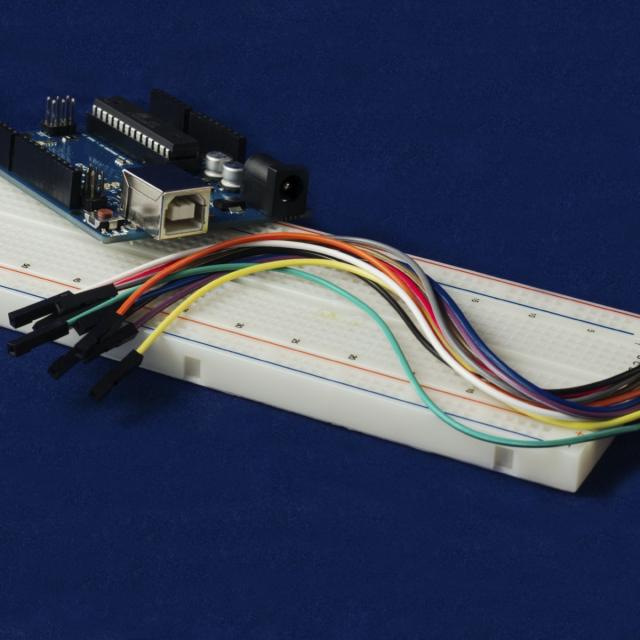
The Arduino is an open-source computer hardware/software platform for building digital devices and interactive objects that can sense and control the physical world around them. In this class you will learn how the Arduino platform works in terms of the physical board and libraries and the IDE (integrated development environment). You will also learn about shields, which are smaller boards that plug into the main Arduino board to perform other functions such as sensing light, heat, GPS tracking, or providing a user interface display. The course will also cover programming the Arduino using C code and accessing the pins on the board via the software to control external devices.

Sep 28th 2026
4 Weeks
The Raspberry Pi Platform and Python Programming for the Raspberry Pi (Coursera) Coursera
University of California, Irvine

The Raspberry Pi Platform and Python Programming for the Raspberry Pi (Coursera)

The Raspberry Pi is a small, affordable single-board computer that you will use to design and develop fun and practical IoT devices while learning programming and computer hardware. In addition, you will learn how to set up up the Raspberry Pi environment, get a Linux operating system running, and write and execute some basic Python code on the Raspberry Pi. You will also learn how to use Python-based IDE (integrated development environments) for the Raspberry Pi and how to trace and debug Python code on the device.

Sep 28th 2026
4 Weeks
Advanced Modeling for Discrete Optimization (Coursera) Coursera
University of Melbourne,The Chinese University of Hong Kong

Advanced Modeling for Discrete Optimization (Coursera)

Optimization is a common form of decision making, and is ubiquitous in our society. Its applications range from solving Sudoku puzzles to arranging seating in a wedding banquet. The same technology can schedule planes and their crews, coordinate the production of steel, and organize the transportation of iron ore from the mines to the ports. Good decisions in manpower and material resources management also allow corporations to improve profit by millions of dollars.

Oct 12th 2026
5-12 Weeks
Functional Programming Principles in Scala (Coursera) Coursera
École Polytechnique Fédérale de Lausanne

Functional Programming Principles in Scala (Coursera)

Functional programming is becoming increasingly widespread in industry. This trend is driven by the adoption of Scala as the main programming language for many applications. Scala fuses functional and object-oriented programming in a practical package. It interoperates seamlessly with both Java and Javascript. Scala is the implementation language of many important frameworks, including Apache Spark, Kafka, and Akka. It provides the core infrastructure for sites such as Twitter, Tumblr and also Coursera.

Sep 28th 2026
5-12 Weeks
Build a Modern Computer from First Principles: Nand to Tetris Part II (project-centered course) (Coursera) Coursera
Hebrew University of Jerusalem

Build a Modern Computer from First Principles: Nand to Tetris Part II (project-centered course) (Coursera)

In this project-centered course you will build a modern software hierarchy, designed to enable the translation and execution of object-based, high-level languages on a bare-bone computer hardware platform. In particular, you will implement a virtual machine and a compiler for a simple, Java-like programming language, and you will develop a basic operating system that closes gaps between the high-level language and the underlying hardware platform.

Oct 12th 2026
5-12 Weeks
Introdução à Ciência da Computação com Python Parte 2 (Coursera) Coursera
Universidade de São Paulo, Brasil

Introdução à Ciência da Computação com Python Parte 2 (Coursera)

Bem vindo ao curso de Introdução à Ciência da Computação destinado aos alunos regulares da Universidade de São Paulo! Esta é a segunda parte do Curso, onde você vai continuar a aprender os principais conceitos introdutórios de Ciência da Computação e também aprenderá a desenvolver pequenos programas na linguagem Python.

Oct 5th 2026
5-12 Weeks
Uso de bases de datos con Python (Coursera) Coursera
University of Michigan

Uso de bases de datos con Python (Coursera)

Este curso presentará a los estudiantes los conceptos básicos del lenguaje de consulta estructurado (Structured Query Language, SQL), así como el diseño básico de bases de datos para almacenar datos como parte de una iniciativa de varios pasos para recopilar, analizar y procesar datos. El curso utilizará SQLite3 como base de datos. También crearemos rastreadores web y procesos de visualización y recopilación de datos de varios pasos. Utilizaremos la biblioteca D3.js para realizar la visualización básica de datos.

Oct 12th 2026
5-12 Weeks
Games, Sensors and Media (Coursera) Coursera
University of California, Irvine

Games, Sensors and Media (Coursera)

You will learn to make fluid digital interactive experiences that are suitable for gaming and use the advanced sensor hardware built into the iPhone and iPad. This includes drawing 2D graphics, playing sounds and music, integrating with Game Center, the iOS physics engine and detecting device orientation and location.

Sep 28th 2026
4 Weeks
Introduction to Open Source Application Development (Coursera) Coursera
Illinois Tech

Introduction to Open Source Application Development (Coursera)

This course introduces basic concepts of systems programming using a modern open source language. You will learn to apply basic programming concepts toward solving problems, writing pseudocode, working with and effectively using basic data types, abstract data types, control structures, code modularization and arrays. You will learn to detect errors, work with variables and loops, and discover how functions, methods, and operators work with different data types. You will also be introduced to the object paradigm including classes, inheritance, and polymorphism.

Oct 5th 2026
5-12 Weeks