Introduction to Computers (Coursera)

Offered by Microsoft,
Introduction to Computers (Coursera)

This course has been designed for individuals seeking entry-level positions in IT support. Whether you're a recent graduate, a career changer, or someone looking to kickstart your career in the tech industry, it will provide you with the foundational knowledge and practical skills needed to excel in the field of IT support.

Class Deals by MOOC List - Click here and see Coursera's Active Discounts, Deals, and Promo Codes.

In this course, you’ll explore computer systems and the security threats that computer users have to deal with. You'll learn about key components like the CPU, memory, storage, and peripherals. You’ll cover how these components interact with the operating system, including CPU processes, memory management, and the role of device drivers. Finally, you’ll explore essential concepts defining hardware and software relationships for a comprehensive understanding of system functionality.
After completing this course, you’ll be able to:
• Identify the key components of a computer system, encompassing hardware elements such as
CPU, memory, storage devices, input/output devices, and peripherals.
• Describe the interaction between computer system components and the operating system,
including how the CPU processes instructions, memory management, and the role of device
drivers.
• Discuss the essential concepts that define the relationship between security, hardware and
software, fostering a comprehensive understanding of system functionality.
This course is part of the following programs:

What you'll learn

  • Learn about computer components like CPU, memory, and storage.
  • Learn how computer system components, such as the CPU, memory, and storage devices, interact with the operating system.

Gain insight into security, hardware, and software relationships.

Syllabus

Introduction to computers and operating systems
This module provides you with a foundational understanding of computer systems, focusing on the intricate relationship between hardware and software. The module starts off by informing you about the current threat landscape of the computing world, giving insight into some of the challenges faced by computer support specialists. You'll explore key hardware components, operating systems, and software types, including their development and functionality. The module covers essential concepts such as memory management, system updates, and network communication, culminating in practical activities to reinforce learning. This comprehensive module is designed to equip you with the knowledge needed to understand and interact effectively with computer technology.

Enterprise systems and security
In this module you will consider servers, storage and backups, computing environments and the process of maintenance and patching in the context of enterprise systems and security.

Business systems applications
This module provides you with an introduction to software in the business context that facilitates the performance of various tasks, enhancing productivity. The limitations of both software and hardware are discussed as well as possible solutions to these limitations.

Final project and assessment: Introduction to computing
In this module you'll step into the role of an IT consultant, helping a business set up its computer system. From picking the right hardware and software to planning how it all connects, you'll design a practical solution that meets the business's unique needs. This hands-on project allows you to showcase the skills and knowledge you gained throughout the course, providing a real-world taste of computer system design and configuration.

Go to Class
MOOC List is learner-supported. When you buy through links on our site, we may earn an affiliate commission.

Related Courses

International Cyber Conflicts (Coursera) Coursera
The State University of New York

International Cyber Conflicts (Coursera)

By nature, cyber conflicts are an international issue that span across nation-state borders. By the end of the course, you will be able to apply the knowledge gained for analysis and management of international cyber incidents and conflicts including for activities such as development of policy related to cybercrime and cyberwarfare. Management of cyber incidents and conflicts requires an interdisciplinary perspective including an understanding of: 1) characteristics of the cyber threats and conflicts themselves, 2) international efforts to reduce and improve cyber security, and 3) psychological and sociopolitical factors.

Sep 28th 2026
5-12 Weeks
Quantitative Model Checking (Coursera) Coursera
EIT Digital

Quantitative Model Checking (Coursera)

The integration of ICT (information and communications technology) in different applications is rapidly increasing in e.g. Embedded and Cyber physical systems, Communication protocols and Transportation systems. Hence, their reliability and dependability increasingly depends on software. Defects can be fatal and extremely costly (with regards to mass-production of products and safety-critical systems).

Oct 5th 2026
5-12 Weeks
Cybersecurity in Healthcare (Hospitals & Care Centres) (Coursera) Coursera
Erasmus University Rotterdam

Cybersecurity in Healthcare (Hospitals & Care Centres) (Coursera)

The Cybersecurity in Healthcare MOOC was developed as part the SecureHospitals.eu project. This project has received funding from the European Union’s Horizon 2020 Coordination Research and Innovation Action under Grant Agreement No. 826497. The course "Cybersecurity in Healthcare" has been developed to raise awareness and understanding the role of cybersecurity in healthcare (e.g., hospitals, care centres, clinics, other medical or social care institutions and service organisations) and the challenges that surround it.

Oct 5th 2026
5-12 Weeks
Cybersecurity Job Search, Resume, and Interview Prep (Coursera) Coursera
IBM

Cybersecurity Job Search, Resume, and Interview Prep (Coursera)

With the digital and AI disruption, cybersecurity professionals are in even higher demand around the world, and the trend shows no sign of slowing. There are also several great candidates. How can you get the edge in such a competitive field? This course will prepare you to enter the job market as a great candidate for an entry-level cybersecurity position. You will be equipped with practical techniques to create job-related documents, such as a resume, a portfolio, a cover letter, and an elevator pitch.

Sep 28th 2026
4 Weeks
Programming Languages, Part A (Coursera) Coursera
University of Washington

Programming Languages, Part A (Coursera)

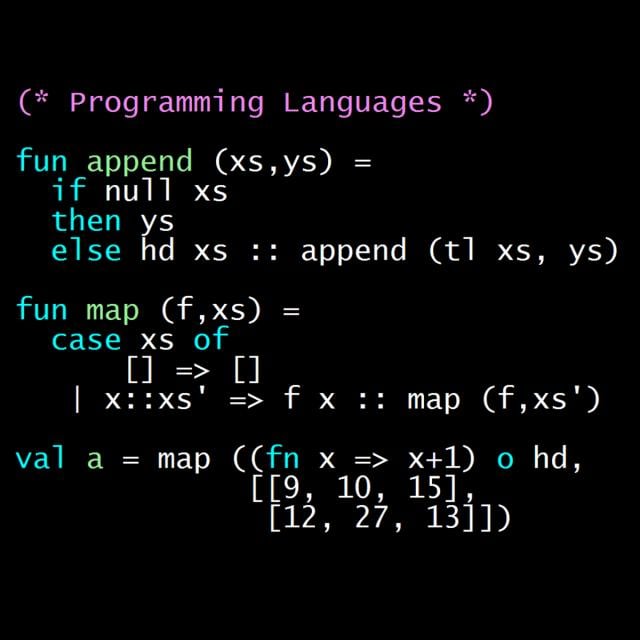
This course is an introduction to the basic concepts of programming languages, with a strong emphasis on functional programming. The course uses the languages ML, Racket, and Ruby as vehicles for teaching the concepts, but the real intent is to teach enough about how any language “fits together” to make you more effective programming in any language -- and in learning new ones.

Oct 5th 2026
5-12 Weeks
Cybercrime (Coursera) Coursera
Royal Holloway, University of London

Cybercrime (Coursera)

This course introduces fundamental notions of cybercrime. Namely, what cybercrime is, the main questions surrounding cybercrime, how cybercrime can be defined, and how it can be studied. You will learn about the difficulties in measuring the occurrence, the frequency and the impact of cybercrime, and build a scepticism on the reliability and the interpretation of cybercrime reports. You will be introduced to discussion about human aspects of cybercrime, in particular, the actors related to cybercrime, that is, the criminals, the victims, and law enforcement.

Sep 28th 2026
4 Weeks
Version Control with Git (Coursera) Coursera
Atlassian

Version Control with Git (Coursera)

The Version Control with Git course provides you with a solid, hands-on foundation for understanding the Git version control system. Git is open source software originally created by Linus Torvalds. Git manages team files for large and small projects. This allows the team to continuously improve its product. It is used by most major technology companies, and is assumed knowledge for many modern programming and IT jobs. It is a core component of DevOps, continuous delivery pipelines and cloud-native computing. You could also use Git to manage the many continuously improving revisions of that book that you are writing.

Oct 5th 2026
4 Weeks
Introduction to Network Security (Coursera) Coursera
University of London,Royal Holloway, University of London

Introduction to Network Security (Coursera)

The security of computer networks is a key element in cyber security. Computer networking provides the foundational connectivity services that are used for the world wide web, distributed computer applications and services, operations and manufacturing, and national infrastructure. This course provides understanding of key technologies used in computer networks and infrastructure. This includes protocols, computer networks, data centres, operational technologies that form key infrastructure critical to the success of organisations and services from a local to an international scale.

Oct 5th 2026
5-12 Weeks
Introduction to Cybersecurity Fundamentals (Coursera) Coursera
Coursera Instructor Network

Introduction to Cybersecurity Fundamentals (Coursera)

"Introduction to Cybersecurity Fundamentals" is a concise yet comprehensive course designed to provide participants with a solid understanding of the essential principles and practices in the field of cybersecurity. In just 90 minutes, learners will embark on a journey into the world of cybersecurity, learning to think like a hacker and developing strategies to protect data and networks. Through engaging lessons and demonstrations, this course will empower participants with the knowledge needed to defend against common cyber threats and install best practices for safeguarding data and privacy.

Sep 28th 2026
1 Week
Gobierno Digital (Coursera) Coursera
Inter-American Development Bank - IDB

Gobierno Digital (Coursera)

La revolución digital ya está presente en muchos aspectos de nuestra vida, ¿y en nuestros gobiernos? Para seguir el ritmo de ciudadanos hiperconectados y del comercio que ahora es cada vez más digital, los gobiernos no se pueden quedar atrás. Muchos países tienen un alto nivel de interés: el 75% de gobiernos ya cuentan con una estrategia de gobierno digital. Sin embargo, estos esfuerzos no se han traducido a la práctica ya que, en 2017, solo el 7% ciudadanos latinoamericanos hizo un trámite en línea.

Oct 5th 2026
4 Weeks
Cybersecurity and Its Ten Domains (Coursera) Coursera
University System of Georgia

Cybersecurity and Its Ten Domains (Coursera)

This course is designed to introduce students, working professionals and the community to the exciting field of cybersecurity. Throughout the MOOC, participants will engage in community discourse and online interaction. Participants will gain knowledge and understanding of cybersecurity and its domains. They will engage with expertly produced videos, gain insight from industry experts, participate in knowledge assessments, practice assessing their environmental awareness, and gain access to materials that address governance and risk management, compliance, business continuity and disaster recovery, cryptography, software development security, access control, network security, security architecture, security operations, and physical and environmental security.

Sep 28th 2026
5-12 Weeks
Introduction to Computers and Office Productivity Software (Coursera) Coursera
The Hong Kong University of Science and Technology - HKUST

Introduction to Computers and Office Productivity Software (Coursera)

In this course, you will learn the following essential computer skills for the digital age: major hardware components of a computer system; different types of software on a computer system; photo Editing using GIMP; and word processing applications, including MS Word, MS Excel, and MS PowerPoint.

Sep 28th 2026
5-12 Weeks