Building a Complete MEAN Stack Application (Coursera)

Offered by Board Infinity,
Building a Complete MEAN Stack Application (Coursera)

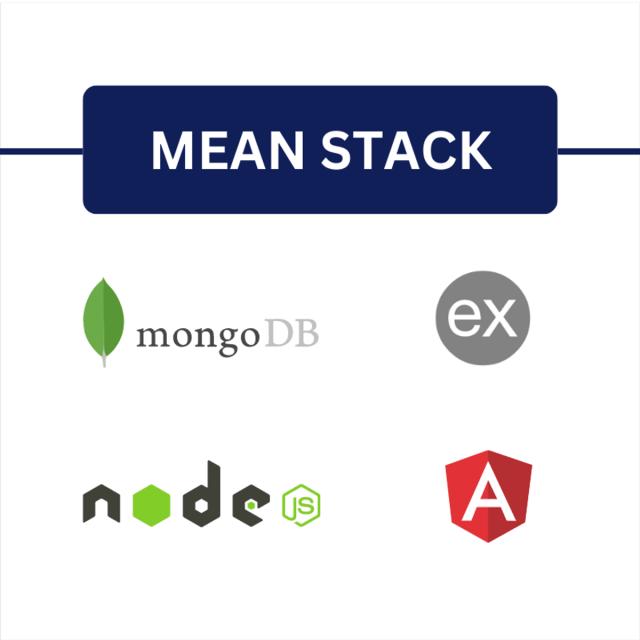
This comprehensive course will guide students through the process of building a complete web application using MongoDB, Express.js, AngularJS, and Node.js.

Class Deals by MOOC List - Click here and see Coursera's Active Discounts, Deals, and Promo Codes.

In the first module, you will explore the principles of backend architecture, focusing on designing scalable and secure backends for real-world applications. They will create a RESTful API using Node.js and Express.js and learn to build a dynamic single-page application with AngularJS. The module also covers how to link the backend with the front end, display data, and manage user interactions in real time.
The second module delves into frontend development principles and user-friendly interface design using HTML, CSS, JavaScript, and AngularJS. Participants will be guided through connecting the frontend with the backend API, handling HTTP requests and responses, and managing user input and form submissions. Additionally, this module emphasizes deployment strategies to ensure the performance and availability of the MEAN stack application.
By the end of this course, you will design and implement a scalable and secure backend using the MEAN stack, build a RESTful API with Node.js and Express.js, integrate it with a front-end SPA using AngularJS, and learn deployment strategies. The course offers hands-on experience and valuable insights, equipping you with the ability to build a complete MEAN stack application from scratch, aligning with real-world application development needs.
This course is part of the Learning MEAN Stack by Building Real world Application Specialization.

Syllabus

Designing Backend for Real-World Application
Module 1
This module will teach you how to design and implement a scalable and maintainable backend for a real-world web application using the MEAN (MongoDB, Express.js, AngularJS, Node.js) stack. You will learn how to architect a backend that can handle a large number of users and requests, and how to implement features like authentication, authorization, and security. You will start by understanding the principles of backend design and architecture, and how to design a backend that can handle the traffic and demands of a real-world application. You will learn how to use Node.js and Express.js to create a RESTful API that can interact with a MongoDB database, and how to use best practices to ensure security and scalability. By the end of this module, you will have the skills and knowledge to design and implement a scalable and secure backend for a real-world web application using the MEAN stack. You will be able to architect a backend that can handle a large number of users and requests.

Creating Frontend & Connecting with Backend
Module 2
This module will teach you how to create a responsive and user-friendly frontend for your MEAN stack application using AngularJS. You will learn how to create views, controllers, and services, and how to use AngularJS to interact with your backend API. You will start by understanding the principles of frontend development, and how to design a user interface that is intuitive and easy to use. You will learn how to use HTML, CSS, and JavaScript to create a responsive and mobile-friendly interface, and how to use AngularJS to handle user interactions and input. Next, you will learn how to use AngularJS to connect your frontend with your backend API. You will learn how to make HTTP requests to your backend, and how to handle responses using promises and observables. You will learn how to create views that display data from your backend, and how to handle user input and form submissions. By the end of this module, you will have the skills and knowledge to create a responsive and user-friendly frontend for your MEAN stack application using AngularJS. You will be able to connect your frontend with your backend API.

Go to Class
MOOC List is learner-supported. When you buy through links on our site, we may earn an affiliate commission.

Related Courses

Building Modern Node.js Applications on AWS (Coursera) Coursera
AWS

Building Modern Node.js Applications on AWS (Coursera)

In modern cloud native application development, it’s oftentimes the goal to build out serverless architectures that are scalable, are highly available, and are fully managed. This means less operational overhead for you and your business, and more focusing on the applications and business specific projects that differentiate you in your marketplace. In this course, we will be covering how to build a modern, greenfield serverless backend on AWS.

Jun 3rd 2024
5-12 Weeks
Deploying Microservices to Kubernetes using Azure DevOps (Coursera) Coursera
Whizlabs

Deploying Microservices to Kubernetes using Azure DevOps (Coursera)

Kubernetes is open-source, and its container orchestration benefits enable automation of various tasks such as deployment, management, and scaling of container-based applications. Presently, you can find various cloud-based applications using Kubernetes workloads. Since the Azure cloud provides ease of running Kubernetes alongside ease of scalability and management of microservices with higher availability, it is one of the foremost choices of all enterprises for DevOps transformation. You can utilize the opportunity to improve your expertise in deploying microservices in Kubernetes and capitalize on many career options.

May 25th 2026
3 Weeks
M220JS: MongoDB for Javascript Developers (MongoDB) MongoDB
MongoDB University

M220JS: MongoDB for Javascript Developers (MongoDB)

Learn the essentials of Node.js application development with MongoDB. This course will teach you how to use MongoDB as the database for a Node.js application. You will play the role of a back-end developer for a Node.js application, where your job is to implement the application's communication with MongoDB. Using the Node.js driver you will read and write data to the database, use the aggregation framework, manage the configuration of the database client, and create a robust application by handling exceptions and timeouts.

Self Paced
Self-Paced
M220J: MongoDB for Java Developers (MongoDB) MongoDB
MongoDB University

M220J: MongoDB for Java Developers (MongoDB)

Learn the essentials of Java application development with MongoDB. This course will teach you how to use MongoDB as the database for a Java application. You will play the role of a back-end developer for a Java application, where your job is to implement the application's communication with MongoDB. Using the Java driver you will read and write data to the database, use the aggregation framework, manage the configuration of the database client, and create a robust application by handling exceptions and timeouts.

Self Paced
Self-Paced
Frontend Development using Angular (Coursera) Coursera
Board Infinity

Frontend Development using Angular (Coursera)

This course is tailored for those interested in web development, and it will equip you with the skills and knowledge needed to become proficient in Angular. In the first module, Introduction to HTML & CSS, you'll explore the foundational principles of HTML and CSS, vital for creating web pages. You'll learn how to structure an HTML document and use CSS to stylize your web page's layout.

May 25th 2026
3 Weeks
Server side JavaScript with Node.js (Coursera) Coursera
NIIT StackRoute

Server side JavaScript with Node.js (Coursera)

Have you ever wondered how you are able to do net banking or book a ticket online? Which technology is adopted for applications used in different businesses? Backend technology acts as a backbone to every web application. It typically includes all services, data interfaces and their core business logic. This course will introduce you to the Node.js environment and help you design and develop backend or server-side of the application. It also provides you with hands on coding exercises and will enable you to build JavaScript programs and test and execute them in the Node.js environment.

Jun 1st 2026
5-12 Weeks
M2M & IoT Interface Design & Protocols for Embedded Systems (Coursera) Coursera
University of Colorado Boulder

M2M & IoT Interface Design & Protocols for Embedded Systems (Coursera)

This course can also be taken for academic credit as ECEA 5348, part of CU Boulder’s Master of Science in Electrical Engineering degree. M2M and IoT Interface Design and Protocols is the third of three classes in the Embedded Interface Design (EID) specialization, an online version of the on-campus EID class taught in graduate embedded systems design. This course is focused on connecting devices to each other and to the cloud to create prototypes and actual systems that flow data from devices to consumers. The class includes an introduction to M2M (Machine-to-Machine) and IoT (Internet of Things) concepts, using the cloud to develop IoT systems (specifically AWS (Amazon Web Services) and its IoT framework), a review of common communications protocols at every level of connected devices, and other IoT design concerns such as security, message queuing approaches, and the use and design of APIs and microservices .

May 25th 2026
4 Weeks
Front-End JavaScript Frameworks: Angular (Coursera) Coursera
The Hong Kong University of Science and Technology - HKUST

Front-End JavaScript Frameworks: Angular (Coursera)

This course concentrates mainly on Javascript based front-end frameworks, and in particular the Angular framework (Currently Ver. 6.x). This course will use Typescript for developing Angular application. Typescript features will be introduced in the context of Angular as part of the exercises. You will also get an introduction to the use of Angular Material and Angular Flex-Layout for responsive UI design. You will be introduced to various aspects of Angular including components, directives and services. You will learn about data binding, Angular router and its use for developing single-page applications.

Mar 13th 2023
4 Weeks
Server-side Development with NodeJS, Express and MongoDB (Coursera) Coursera
The Hong Kong University of Science and Technology - HKUST

Server-side Development with NodeJS, Express and MongoDB (Coursera)

This course deals with all things server-side. We base the entire course around the NodeJS platform. We start with a brief overview of the Web protocols: HTTP and HTTPS. We examine NodeJS and NodeJS modules: Express for building web servers. On the database side, we review basic CRUD operations, NoSQL databases, in particular MongoDB and Mongoose for accessing MongoDB from NodeJS. We examine the REST concepts and building a RESTful API. We touch upon authentication and security. Finally we review backend as a service (BaaS) approaches, including mobile BaaS, both open-source and commercial BaaS services.

Mar 13th 2023
4 Weeks
Front-End Web UI Frameworks and Tools: Bootstrap 4 (Coursera) Coursera
The Hong Kong University of Science and Technology - HKUST

Front-End Web UI Frameworks and Tools: Bootstrap 4 (Coursera)

This course will give you an overview of client-side web UI frameworks, in particular Bootstrap 4. You will learn about grids and responsive design, Bootstrap CSS and JavaScript components. You will learn about CSS preprocessors, Less and Sass. You will also learn the basics of Node.js and NPM and task runners like Grunt and Gulp.

Mar 13th 2023
4 Weeks
Introduction to MongoDB (Coursera) Coursera
MongoDB University

Introduction to MongoDB (Coursera)

"Introduction to MongoDB" guides you through the foundational skills and knowledge you need to get started with MongoDB. Get an introduction to MongoDB Atlas, the developer data platform, and how to create and deploy an Atlas cluster. Discover how MongoDB structures data in documents similar to JSON objects, making it flexible and developer friendly.

May 25th 2026
4 Weeks