Étudier en France : cours de français intermédiaire B1-B2 (Coursera)

Offered by École Polytechnique,
Étudier en France : cours de français intermédiaire B1-B2 (Coursera)

Ce cours de français de niveau intermédiaire B1/B2, conforme aux exigences du Cadre européen de Référence pour les Langues, s’inscrit dans le double dispositif “former avec le numérique”et “langue et interculturalité” mis en place par l’Université Paris Saclay. Il s’adresse à tous les étudiants souhaitant poursuivre leurs études supérieures en France. Il leur permettra non seulement d’avoir le niveau requis en français pour suivre des cours dans le système supérieur français en termes de compétences linguistiques, mais les aidera à s’adapter à leur nouvel environnement dans les meilleures conditions.

Class Deals by MOOC List - Click here and see Coursera's Active Discounts, Deals, and Promo Codes.

Ce cours propose en effet une immersion dans l’univers étudiant à travers des vidéos de cours, des textes de multiples formats, de courts extraits de films et de vidéos authentiques qui donnent la parole à des étudiants français ou étrangers vivant en France. Les étudiants pourront ainsi travailler toutes les compétences (compréhension orale et écrite, expression orale et écrite, grammaire et vocabulaire), puis tester ensuite leurs acquis grâce aux nombreux quiz proposés et, chaque semaine, ils auront aussi la possibilité de participer aux débats et aux discussions organisés sur le forum. Découvrir la vie en France et dans le monde francophone à travers ses cultures, ses littératures, ses films, ses journaux télévisés et sa langue (standard et plus familière) et comprendre le système d’enseignement supérieur français (assister à un cours magistral, comprendre le fonctionnement de l’évaluation …) : voici quelques-uns des enjeux de ce cours. Ses objectifs sont donc langagiers, mais aussi culturels et pratiques !
Note importante: ce Mooc ne remplace pas la passation de tests attestant du niveau B1 ou B2 tels que ceux proposés par le Ciep: TCF, Delf ou Dalf.
Ce cours a été financé grâce au soutien de l’Université Paris-Saclay et celui de la fondation Patrick et Lina Drahi.

Syllabus

WEEK 1
Semaine 0 : Présentation du cours
Semaine 1: Arriver en France
Pendant cette première semaine, vous allez vivre une première expérience : l'arrivée en France! L'objectif est donc culturel (découvrir la France et les Français) et interculturel (comprendre ce que signifie l'expatriation) mais aussi ... linguistique. Vous allez pouvoir réviser un temps important du passé (le passé composé) et ainsi améliorer votre maîtrise de l'accord du participe passé; travailler le vocabulaire des transports et de l'expatriation ainsi que la prononciation de certains sons. Et, comme chaque semaine, de nombreux exercices pratiques vous seront proposés : quiz, travail d'écriture, débat ... Bonne semaine à tous!

WEEK 2
Semaine 2 : S'adapter à la vie en France
Pendant cette semaine, vous allez commencer à découvrir la France et sa capitale, Paris. En ce qui concerne la langue, nous verrons deux autres temps du passé : l'imparfait et le plus-que-parfait. Mais il va aussi falloir s'adapter à la vie quotidienne en France et trouver un logement. C'est sur ce vocabulaire, dont vous aurez très vite besoin, que cette deuxième semaine s'attardera. Vous pourrez aussi tester et améliorer votre prononciation d'un son particulièrement difficile du français : le R de "grand". Bonne semaine à tous!

WEEK 3
Semaine 3 : Devenir étudiant en France
Cette semaine, nous allons vous faire découvrir le système universitaire français présent ... et passé à travers différents extraits de romans et de films. Vous allez aussi apprendre le vocabulaire nécessaire à votre inscription et à votre adaptation à la vie universitaire. Et comme chaque semaine, nous travaillerons aussi la prononciation avec des exercices sur les nasales. En grammaire, nous aborderons les prépositions. Bonne semaine à tous!

WEEK 4
Semaine 4 : Assister à un cours
Cette semaine, vous allez pouvoir approfondir votre connaissance de l'univers étudiant en assistant à un cours. Grâce à de petites vidéos de cours, vous aurez un premier aperçu de la manière dont se déroule un cours en France. Nous vous donnerons aussi quelques conseils méthodologiques pour réussir à l'université! Dans la partie vocabulaire, nous reviendrons justement sur le vocabulaire de l'oral et les connecteurs logiques à employer. En grammaire, nous travaillerons sur les différents modes (indicatif, subjonctif, infinitif...) et en expression orale, sur la prononciation des sons p/b et u/ou. Bonne semaine à tous!

WEEK 5
Semaine 5: Communiquer et s'intégrer
Cette semaine a pour objectif de vous donner quelques clés pour vous intégrer au plus vite en France! Vous allez apprendre à mieux connaître la France et ses spécificités culturelles et politiques (symboles, drapeau, laïcité, accents régionaux ...) mais aussi à vous adapter à la vie quotidienne (ouvrir un compte bancaire, écrire une lettre officielle ...). En grammaire, nous travaillerons sur les pronoms et en expression orale, sur la prononciation du /s/ de "poisson" et du /z/ de "poison". Bonne semaine à tous!

WEEK 6
Semaine 6: Vivre en France
Cette semaine, vous allez découvrir la vie en France vue par des étudiants étrangers et d'autres expatriés! Vous pourrez également avoir un nouvel aperçu de la vie quotidienne en France à travers le thème de la gastronomie ainsi que celui de la santé. En grammaire, nous reviendrons sur l'emploi des pronoms en vous proposant la suite de la vidéo sur les pronoms de la semaine 5. En ce qui concerne l'expression orale, nous aborderons un point difficile : la question de la prononciation des finales et des liaisons! Bonne semaine à tous!


Go to Class
MOOC List is learner-supported. When you buy through links on our site, we may earn an affiliate commission.

Related Courses

Mandarin Chinese 2: Chinese for Beginners (Coursera) Coursera
Shanghai Jiao Tong University

Mandarin Chinese 2: Chinese for Beginners (Coursera)

Mandarin Chinese 2: Chinese for beginners is a beginner's course of Mandarin Chinese in continuation of Mandarin Chinese 1: Chinese for beginners. It uses lectures, short plays, interactive exercises and cultural tips to help learners build a fundamental capability of oral Chinese in real-life situations. At the end of the 5-lesson course, the learners will reach the following proficiency: 300 words; 40 language points; handling 10 real-life situations

Sep 8th 2026
5-12 Weeks
Arabic for Beginners: Arabic in the Workplace (Coursera) Coursera
Khalifa University

Arabic for Beginners: Arabic in the Workplace (Coursera)

This course is the third and last of a three-course specialization in elementary Arabic. This course delves into Modern Standard Arabic in various settings in real-life situations, including education, workplace, technology, sports, and more. At the end of this last course, the students will be tested on their summative, comprehensive Arabic skills to assess their competency in Modern Standard Arabic.

Sep 14th 2026
5-12 Weeks
Children Acquiring Literacy Naturally (Coursera) Coursera
University of California, Santa Cruz

Children Acquiring Literacy Naturally (Coursera)

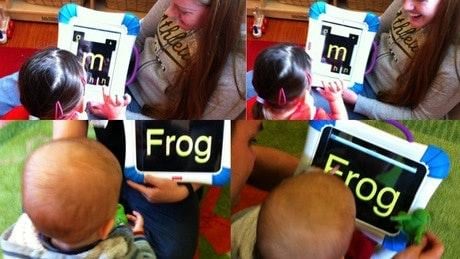
In this short course you will explore the possibility that children might acquire written language in a way that is similar to how they acquire spoken language—without instruction. You will encounter various aspects of behavioral science and technology that are relevant to this proposition. You will have the opportunity to learn the the perceptual, cognitive, and neurological capacities of children during their first years of life. You will advance your understanding of children and how they learn language. You will also be more attuned to current advances in the technology of human machine interactions, and what these phenomena imply for learning to read at an early age.

Sep 28th 2026
3 Weeks
A Bridge to the World: Korean Language for Beginners Ⅰ (Coursera) Coursera
Sungkyunkwan University - SKKU

A Bridge to the World: Korean Language for Beginners Ⅰ (Coursera)

This course is an introductory course to Korean language that aims to cultivate basic communication skill for those that are interested in learning Korean language. The course is composed of essential expressions that are often used in everyday life, and designed to teach grammars using basic dialogues which reflect colloquial characteristics of Korean language so by end of this course, a student will be able to express him/herself on ordinary topics.

Sep 14th 2026
5-12 Weeks
Teaching Tips for Tricky English Grammar (Coursera) Coursera
University of California, Irvine

Teaching Tips for Tricky English Grammar (Coursera)

This is the third course in the Teach English: Intermediate Grammar specialization. It will be useful to ESL teachers or those interested in learning to teach English language, but it is not an introduction to teaching course. You will learn about some specific problems students have learning intermediate grammar. You will learn why students have trouble with this tricky grammar and find out new ways to help students conquer it.

Sep 7th 2026
4 Weeks
Simple Past Tense (Coursera) Coursera
University of California, Irvine

Simple Past Tense (Coursera)

In this course, “Simple Past Tense,” you will learn how to form and use the simple past. You will see that there are a lot of irregular verbs in the simple past, but there are some patterns you can use to help you remember. You will learn about spelling changes when you add an “-ed” ending, as well as how to form negatives and questions in the past. You will also learn about object pronouns and some other forms of adjectives to describe and make comparisons.

Sep 14th 2026
4 Weeks
Interview Research and Preparation (Coursera) Coursera
University of Maryland, College Park

Interview Research and Preparation (Coursera)

This course, the first in the "Interviewing and Resume Writing in English" specialization, guides you to discover the interests, talents and competencies that you can use to find and do work that leverages your strengths, passions and who you are as a person, so you can start doing work that matters to you and to the world. Whether you already have a career and are looking to move forward, whether you’re looking to change careers, whether you’re starting out in the world of work, whether you’re coming back into the world of work after some time away – this course will help you see your path more clearly and will teach you how to communicate your value to an employer in a way that he or she can immediately recognize.

Sep 7th 2026
5-12 Weeks
Conciencia Lingüística (Coursera) Coursera
Universidad Autónoma Metropolitana

Conciencia Lingüística (Coursera)

Al finalizar el curso serás capaz de: Tomar conciencia acerca de cómo funciona el lenguaje humano, en lo que se refiere a la formación de palabras y estructuras que usamos a diario, su combinación y sus distintas posibilidades de significado. Con ello, se espera que el estudiante desarrolle una conciencia lingüística sobre el español y, con ello, logre un mayor control sobre el uso creativo de las palabras y las oraciones en español.

Sep 7th 2026
4 Weeks
Low Intermediate English: Calls & Messaging (Coursera) Coursera
Voxy

Low Intermediate English: Calls & Messaging (Coursera)

In this course, you will learn how to get in touch with all the people in your life by phone, email, text, and even social media. Learning activities in this course will take place on Voxy, an engaging language learning platform that automatically adapts to your current level and your performance across reading, listening, speaking, grammar, and vocabulary skills so that every lesson is optimized for rapid improvement.

Sep 7th 2026
5-12 Weeks
Business Russian Communication. Part 2 (Coursera) Coursera
Saint Petersburg State University

Business Russian Communication. Part 2 (Coursera)

Russian is considered to be one of the most difficult languages in the world, and many learners struggle to master its grammar and pronunciation. This course is aimed at those who wants to work in Russia, do business with Russian partners or study on business-related majors in Russian. In three units of this intensive course learners are going to find out how to maintain phone conversation with Russian partners and what speech clichés can be used, hope to pan and arrange an appointment and how to discuss business-related topics over email.

Aug 8th 2022
4 Weeks
Tricky English Grammar (Coursera) Coursera
University of California, Irvine

Tricky English Grammar (Coursera)

English is a difficult language to learn because of its many obscure grammatical rules, which are fairly easy to mess up--even for native speakers. While it’s easy for non-native speakers to get overwhelmed by confusing grammar rules, in this course, we'll provide you with tips that will help you understand the rules more easily and give you lots of practice with the tricky grammar of everyday English.

Sep 7th 2026
4 Weeks